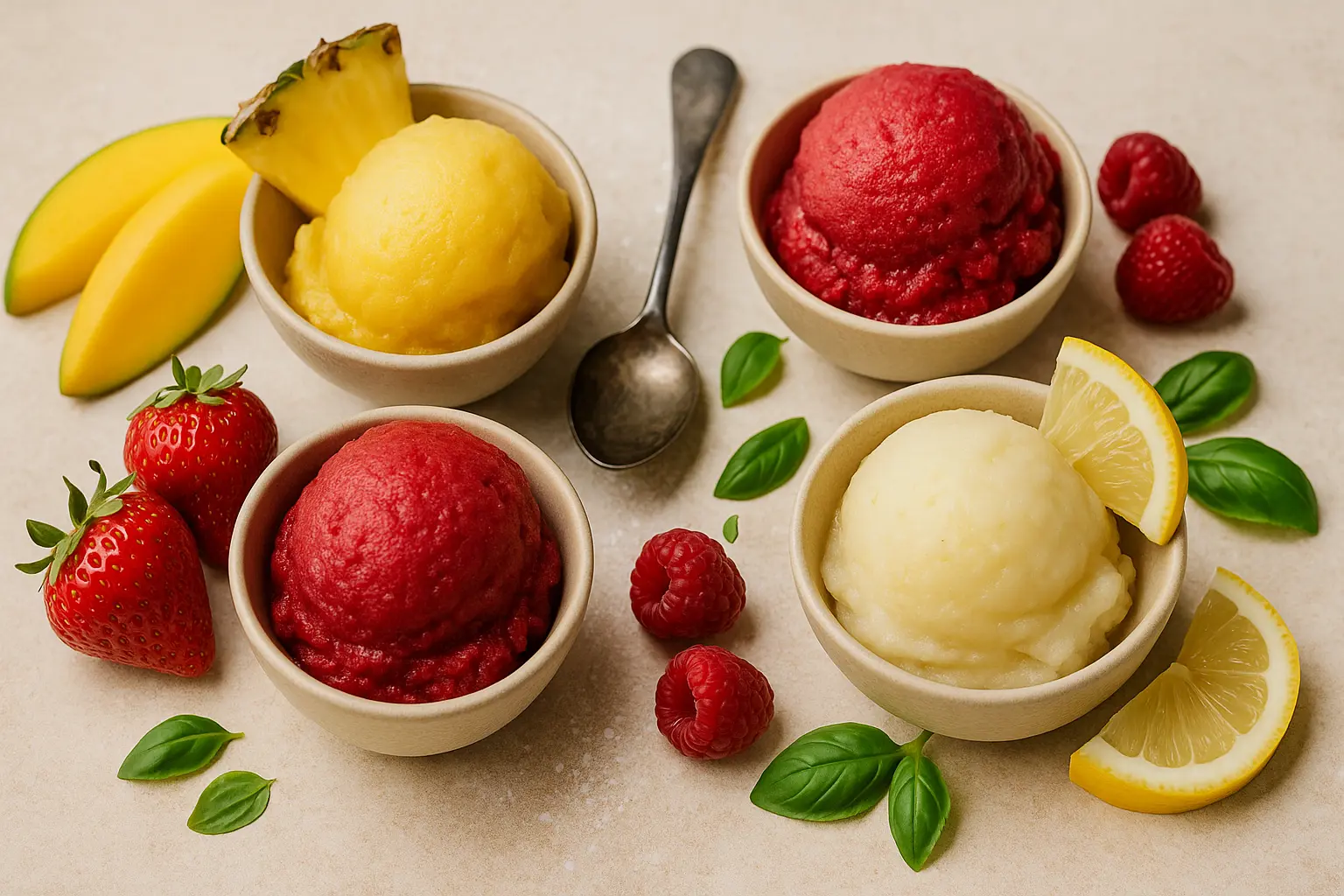
When the sun blazes and the temperature rises, there’s nothing quite as satisfying as a bowl of icy, refreshing sorbet. Unlike ice cream, which traditionally relies on cream, milk, or eggs, sorbet is naturally dairy-free. At its core, sorbet is a frozen mixture of fruit, sugar, and water — simple, clean, and bursting with flavor.
But dairy-free doesn’t mean boring. In fact, it opens up a world of vibrant possibilities: tropical mango sorbet, tangy lemon granita, sophisticated champagne sorbet, or even herbal infusions like basil-lime. Whether you’re vegan, lactose-intolerant, or simply looking for a lighter dessert, sorbets deliver on taste, health, and versatility.
In this long-form guide, we’ll explore everything you need to know about making sorbet at home — from the science of achieving that silky scoop to global recipe inspirations and tips for pairing sorbets with meals.
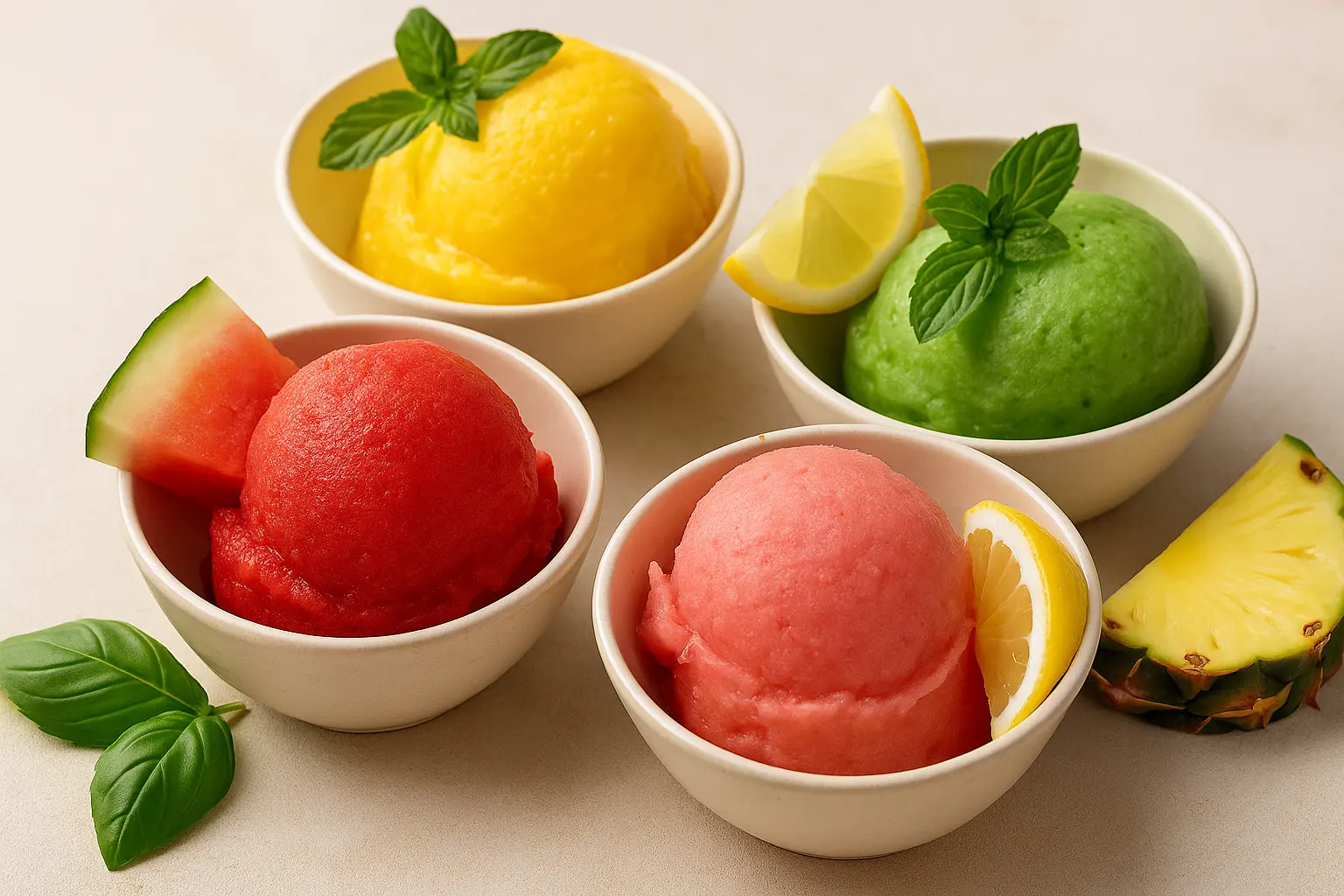
1. What Makes Sorbet Special?
Sorbet is not just “ice without dairy.” It has its own proud culinary history, dating back centuries to the Middle East and Italy. Originally called sherbet in Persian and Arabic cultures, it evolved into the Italian “sorbetto” and the French “sorbet.”
Key qualities of a great sorbet:
- Fresh fruit flavor: Sorbet highlights natural ingredients without masking them with cream or butterfat.
- Smooth yet icy texture: The balance between sugar and liquid creates a scoopable consistency.
- Naturally dairy-free: Ideal for vegan, vegetarian, and lactose-intolerant diets.
- No baking required: Quick, easy, and refreshing — perfect for hot days.
2. The Science Behind Sorbet
Making sorbet is both art and science. The main challenge? Preventing it from turning into a rock-solid block of ice.
Key Factors in Texture
- Sugar Content: Sugar lowers the freezing point, ensuring the sorbet stays scoopable.
- Fruit Pectin & Fiber: Fruits like mango, banana, and berries add body naturally.
- Alcohol & Acid: A splash of liqueur or lemon juice helps break up ice crystals.
- Churning: If you use an ice cream maker, constant movement incorporates air and prevents large ice crystals.
A general rule:
- Aim for 20–30% sugar content in your sorbet base.
- Too little sugar = icy texture.
- Too much sugar = slushy texture.
3. Core Method: How to Make Sorbet
Even without an ice cream machine, you can craft delicious sorbets at home.
Basic Sorbet Formula:
- 3 cups fruit puree or juice
- 1 cup sugar (adjust based on fruit sweetness)
- 1 cup water (or coconut water for extra flavor)
- 1–2 tbsp lemon or lime juice
Steps:
- Blend fruit into a smooth puree.
- Heat water + sugar until dissolved (simple syrup). Cool.
- Mix fruit puree, syrup, and lemon juice.
- Chill thoroughly in the fridge.
- Freeze in an ice cream maker or pour into a shallow pan and scrape every 30 minutes (granita style).
4. Global Sorbet Inspirations
One of the joys of sorbet is how it adapts across cuisines. Here are globally inspired dairy-free sorbets:
Italian Lemon Sorbetto
Classic palate cleanser served between courses. Bright, tart, and elegant.
Thai Mango & Sticky Rice Sorbet
Inspired by Thailand’s iconic dessert, blending mango with coconut milk for a creamy but dairy-free twist.
Mexican Hibiscus Sorbet (Sorbet de Jamaica)
Hibiscus flowers steeped into a tart, ruby-red sorbet with citrus undertones.
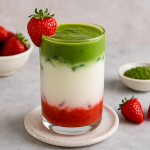
Japanese Matcha & Yuzu Sorbet
A modern fusion of earthy matcha with fragrant Japanese citrus.
Indian Spiced Guava Sorbet
Sweet guava puree infused with a pinch of cardamom and chili salt.
French Champagne Sorbet
Light, bubbly, and ideal for celebrations.
5. Recipes: Dairy-Free Sorbets You Can Try
Here are detailed recipes you can make at home:
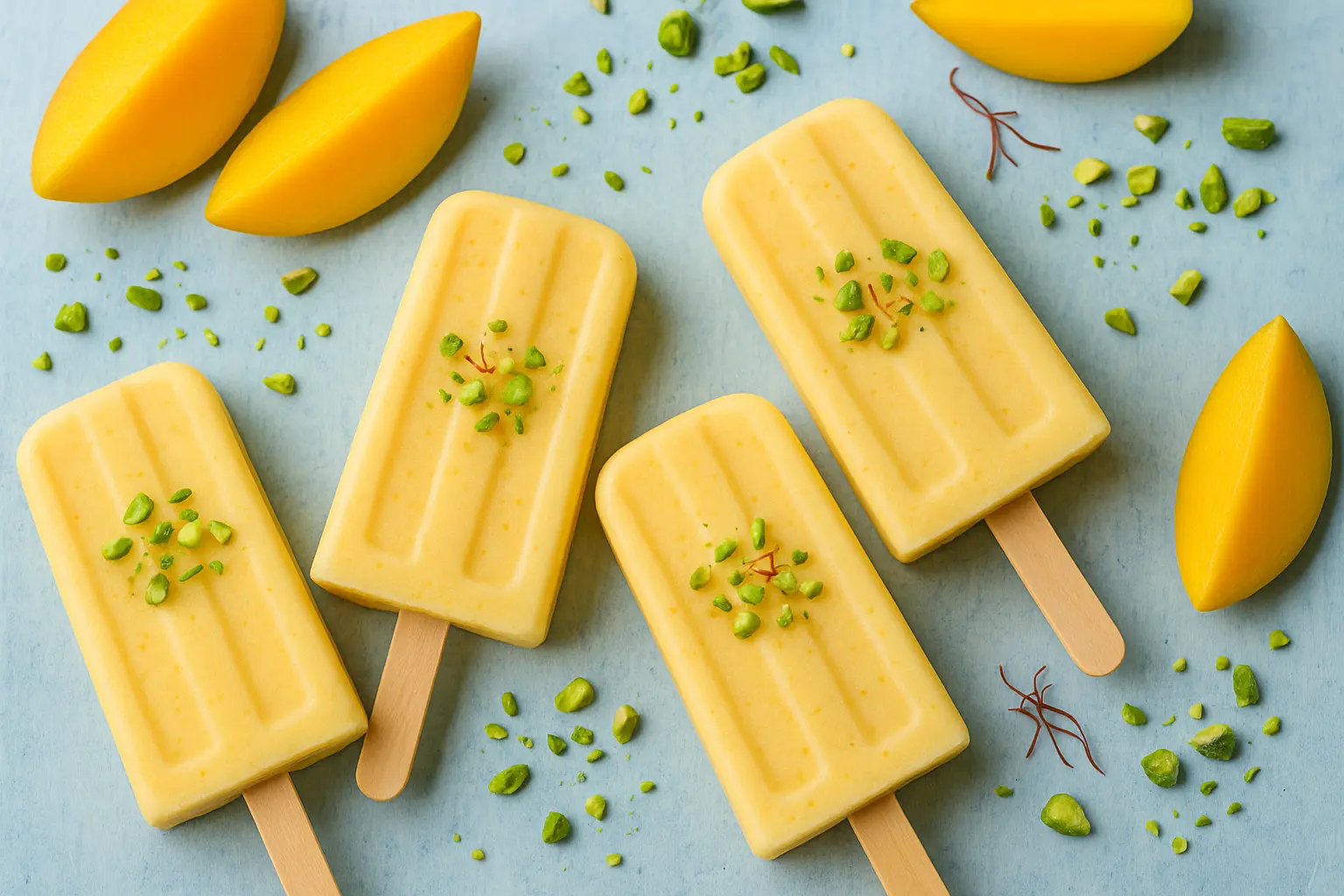
1. Mango Coconut Sorbet
- 3 ripe mangoes
- ½ cup coconut water
- ¼ cup sugar (or to taste)
- Juice of 1 lime
Method: Puree mango, mix with coconut water, sugar, and lime. Freeze.
2. Classic Lemon Sorbet
- 1 cup lemon juice
- 2 cups water
- ¾ cup sugar
Method: Make syrup, stir in lemon juice, chill, freeze.
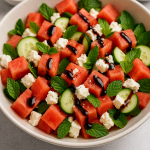
3. Watermelon Basil Sorbet
- 4 cups watermelon chunks
- ½ cup sugar
- 2 tbsp lemon juice
- Handful of fresh basil
Method: Blend watermelon + basil, add syrup, freeze.
4. Pineapple Chili Sorbet
- 3 cups pineapple puree
- ½ cup sugar
- Pinch of chili powder
Method: Blend, freeze — a sweet and spicy kick.
5. Strawberry Rose Sorbet
- 2 cups strawberries
- ½ cup sugar
- 1 tsp rose water
Method: Blend, freeze, enjoy floral notes.
6. Tips for Perfect Dairy-Free Sorbet
- Strain fruit puree for smoother texture.
- Taste before freezing — sorbet base should taste slightly sweeter than you like (cold dulls sweetness).
- Use ripe fruit — underripe fruit = bland sorbet.
- Experiment with herbs & spices like mint, ginger, or cinnamon.
- Store properly — cover tightly to prevent freezer burn.
7. Pairing Sorbets with Meals
Sorbets aren’t just desserts. They work as:
- Palate cleansers between courses.
- Cocktail mixers (think sorbet in champagne).
- Light desserts after rich meals.
- Creative toppings for waffles, pancakes, or even savory dishes (like chili sorbet with grilled meats).
8. Health Benefits of Sorbet
Compared to ice cream, sorbets are:
- Lower in fat & calories (no cream).
- Packed with fruit vitamins like vitamin C and antioxidants.
- Vegan & dairy-free by default.
- Digestive friendly when made with citrus or ginger.
9. Sorbet vs. Granita vs. Ice Cream
- Sorbet: Smooth, scoopable, fruit-based, no dairy.
- Granita: Coarse, icy flakes, stirred during freezing.
- Ice Cream: Creamy, dairy-based, often egg-based.
Sorbets hit the sweet spot between indulgence and refreshment.
10. Creative Sorbet Variations
- Alcoholic Sorbets: Mojito sorbet, champagne sorbet, rosé sorbet.
- Layered Sorbets: Two fruit layers frozen for visual appeal.
- Savory Sorbets: Tomato sorbet with basil, cucumber sorbet with mint (great as starters).
11. Seasonal Sorbets
- Summer: Mango, watermelon, pineapple.
- Autumn: Apple cider sorbet, pear & ginger.
- Winter: Blood orange sorbet, pomegranate.
- Spring: Strawberry rhubarb, apricot.
12. Storage and Shelf Life
Homemade sorbets last 2–3 weeks in the freezer before losing texture. Always keep tightly sealed. To refresh texture, pulse in a food processor before serving.
Conclusion
Sorbets prove that dessert can be indulgent without cream or milk. They’re vibrant, naturally dairy-free, endlessly customizable, and perfect for hot summer days or elegant dinner parties. From global inspirations like Italian lemon sorbetto to creative twists like pineapple-chili, sorbets offer a refreshing way to enjoy fruits in their purest form.
Whether you’re vegan, lactose-intolerant, or simply craving a light dessert, these frozen treats deliver the cool sweetness you need. All you need is fruit, sugar, and a little creativity.

Leave a comment
Your email address will not be published. Required fields are marked *