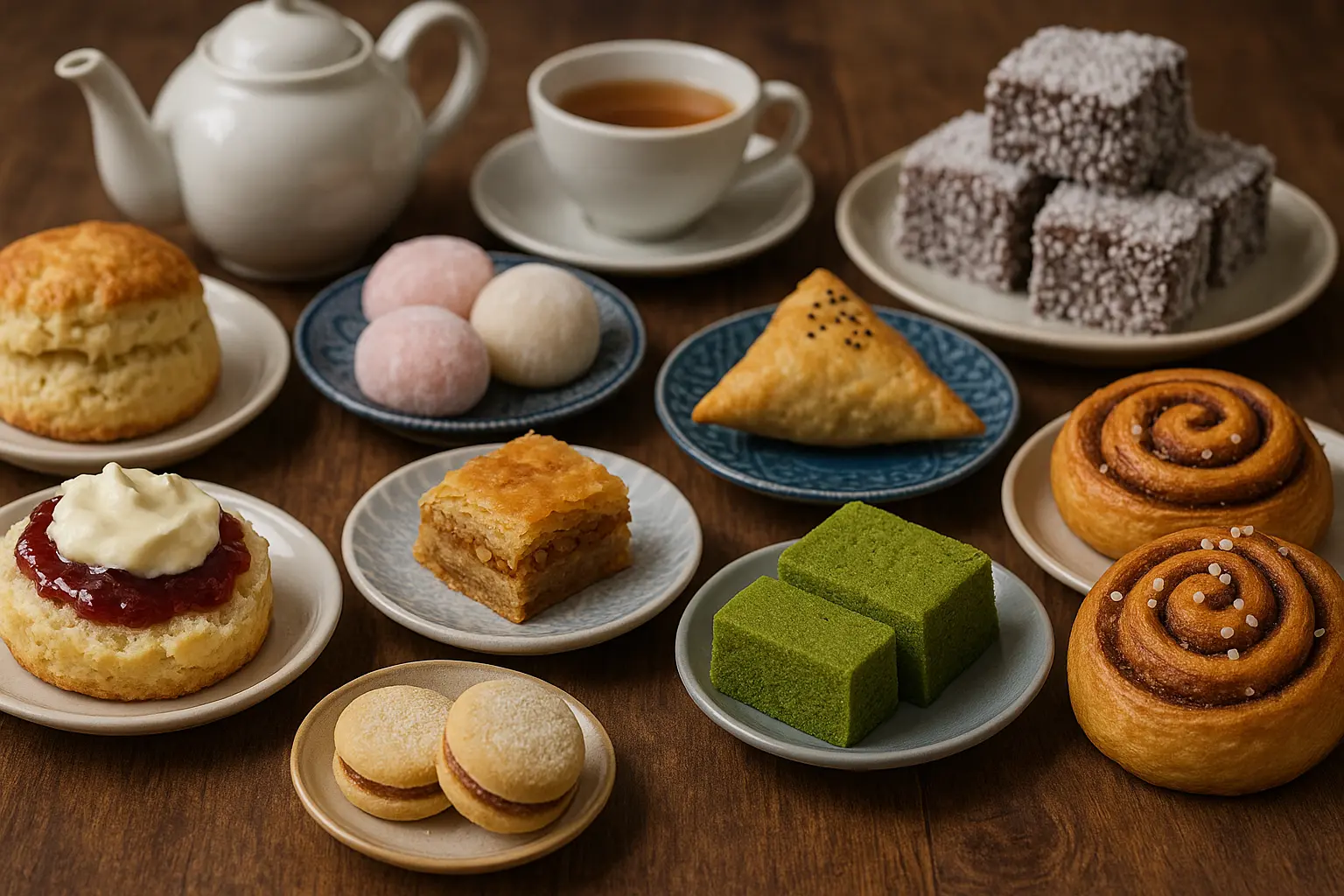
Tea is more than just a beverage—it’s a ritual, a pause in the day, and often, a reason to gather with friends and family. From London to Tokyo, Marrakech to Buenos Aires, tea-time traditions bring with them a spread of delicious snacks and desserts, each reflecting the culture of its region. While the tea itself may differ—black, green, herbal, or spiced—the accompanying treats create memorable pairings that make tea-time an event worth savoring.
This blog takes you on a journey through tea-time tables across continents, uncovering both classic recipes and hidden gems. You’ll discover Europe’s flaky pastries, Asia’s delicate sweets, Africa’s spice-rich nibbles, and the Americas’ fusion treats. Whether you’re looking for simple baking recipes or globally inspired desserts, these ideas will help you curate a truly international tea spread.
Europe: Elegance and Indulgence
When it comes to tea-time, Europe is steeped in tradition. Afternoon tea in Britain set the stage for pairing pastries, sandwiches, and scones with a comforting pot of Earl Grey. But every European nation has its own spin.
1. Britain – Scones with Clotted Cream and Jam
Perhaps the most iconic tea-time treat, British scones are tender, lightly sweetened breads best served warm. The perfect scone is fluffy inside, golden on top, and paired with clotted cream and strawberry jam. Variations include fruit scones with raisins or savory versions with cheddar.
2. France – Madeleines and Financiers
France’s tea-time is as elegant as its cuisine. Madeleines—shell-shaped sponge cakes with a hint of lemon—are delicate yet flavorful. Financiers, small almond cakes often baked in rectangular molds, pair beautifully with green or herbal teas. Both showcase France’s mastery of baking simplicity with refined taste.
3. Italy – Biscotti
These twice-baked cookies are crunchy delights that stand up to dunking in tea. Classic flavors include almond, pistachio, or chocolate-chip variations. Biscotti are especially loved for their long shelf life, making them perfect for a tea-time pantry staple.
4. Austria – Sachertorte
From Vienna’s coffee houses comes the Sachertorte, a dense chocolate cake layered with apricot jam and finished with a glossy chocolate glaze. Though traditionally paired with coffee, it has found its way to tea tables worldwide, particularly for special occasions.
5. Scandinavia – Cinnamon Buns (Kanelbullar)
In Sweden, the concept of “fika” (a coffee or tea break with pastries) highlights cinnamon buns as a cultural favorite. Soft, spiced dough spirals dusted with sugar crystals make a cozy match with black tea.
Asia: Delicate, Colorful, and Tea-Infused
Asia’s tea-time treats often mirror the teas themselves—light, nuanced, and artfully presented. From matcha cakes in Japan to spiced snacks in India, the continent offers a wide spectrum of flavors.
1. Japan – Matcha Cakes and Mochi
Japanese tea culture is inseparable from sweets. Matcha (green tea powder) lends its earthy, slightly bitter flavor to cakes, cookies, and even ice cream. Mochi—chewy rice cakes filled with red bean paste or fruit—are another staple for tea gatherings.
2. China – Mooncakes
Traditionally eaten during the Mid-Autumn Festival, mooncakes are dense pastries with fillings like lotus seed paste, salted egg yolk, or red bean. Their rich, slightly sweet taste pairs well with oolong or jasmine tea.
3. India – Pakoras and Masala Chai Companions
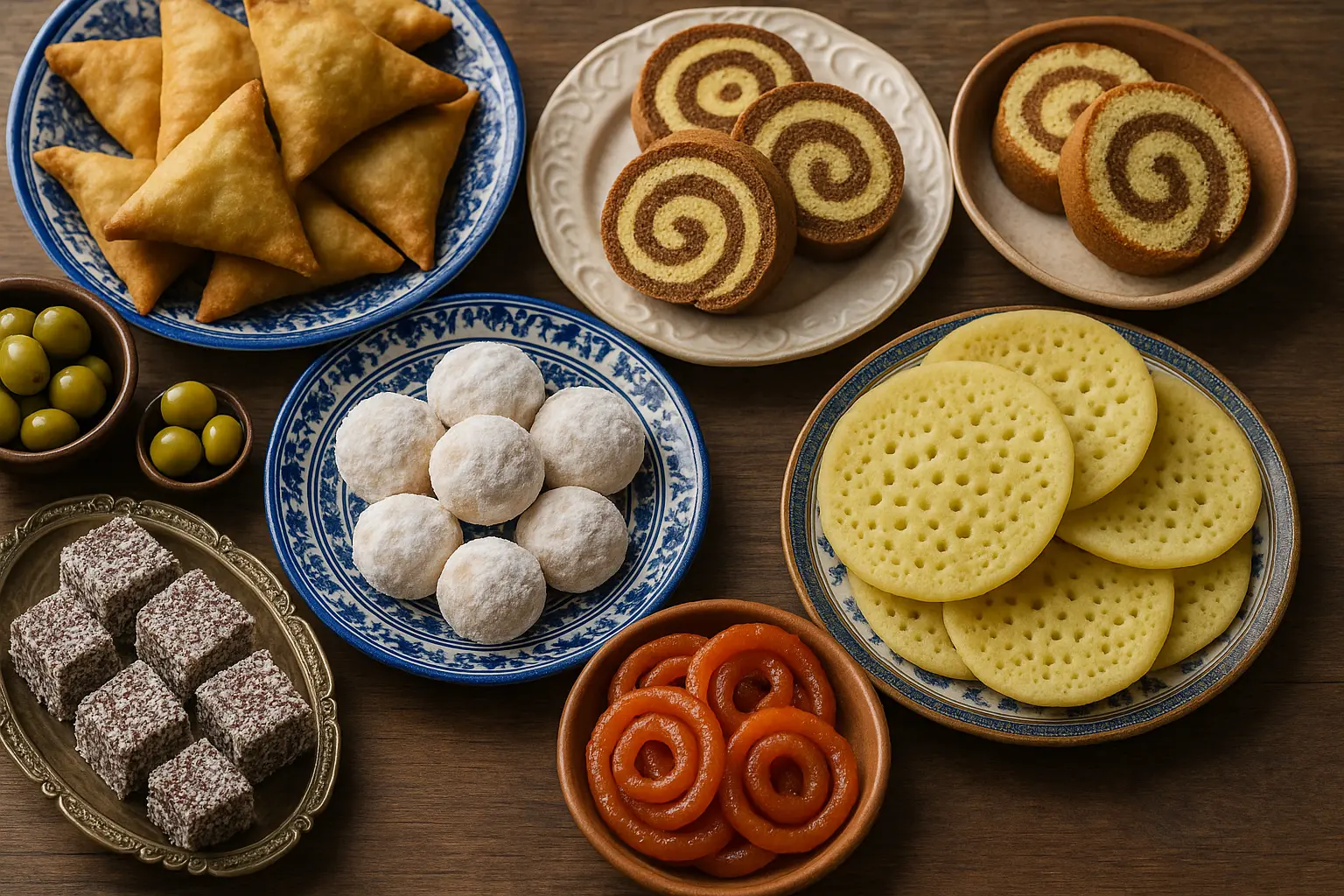
Tea in India, often spiced into masala chai, is rarely enjoyed without savory snacks. Onion pakoras (crispy fritters), samosas, or mathri (spiced crackers) create the ultimate pairing of hot, spiced tea and crunchy bites. For sweets, cardamom-laced cookies or coconut ladoos are popular companions.
4. Middle East – Baklava and Ma’amoul
Though geographically bridging Asia and Africa, Middle Eastern tea-time deserves its spotlight. Baklava’s layers of filo pastry, nuts, and honey syrup are luxuriously sweet, while ma’amoul—date-filled shortbread cookies—offer a crumbly, aromatic counterpart to mint or black tea.
5. Southeast Asia – Pandan Cakes and Kuih
Flavored with fragrant pandan leaves, sponge-like pandan cakes are a staple in Malaysia and Singapore. Kuih, bite-sized colorful desserts made with rice flour and coconut milk, bring vibrant charm to tea-time spreads.
Africa: Spice and Tradition
Tea culture in Africa varies widely, with North African mint teas and Eastern African spiced chai shaping their food traditions. Tea-time here is vibrant, often featuring bold flavors and rustic textures.
1. Morocco – Mint Tea with Kaab el Ghazal
Moroccan mint tea is sweet, aromatic, and traditionally served with kaab el ghazal (“gazelle horns”), crescent-shaped pastries filled with almond paste and orange blossom water. The combination balances refreshing tea with nutty sweetness.
2. Ethiopia – Honey Bread (Yemarina Yewotet Dabo)
Ethiopia’s honey bread is mildly sweet, spiced with cardamom, and makes a satisfying accompaniment to tea. It represents how staple ingredients like honey play a central role in African desserts.
3. South Africa – Rusks
South African rusks are crunchy, twice-baked biscuits, often flavored with buttermilk or anise. They are dipped into rooibos tea, a naturally caffeine-free herbal tea that is beloved across the country.
4. Egypt – Basbousa
This semolina cake soaked in sugar syrup is soft, moist, and lightly flavored with coconut. Often topped with almonds, it pairs beautifully with black tea.
The Americas: Sweet Comforts and Bold Flavors
Tea-time isn’t as culturally formal in the Americas, where coffee has often dominated, but traditions exist, especially in regions influenced by European settlers.
1. Argentina – Medialunas with Yerba Mate
Argentina’s national drink, yerba mate, is often sipped alongside medialunas, small croissant-like pastries with a sweet glaze. They are softer and more tender than French croissants, offering a comforting tea-time option.
2. United States – Cookies and Banana Bread
From chocolate chip cookies to oatmeal raisin, cookies are America’s go-to tea-time snack. Banana bread, often studded with walnuts or chocolate chips, has become a household staple and pairs beautifully with both tea and coffee.
3. Brazil – Pão de Queijo
These cheese breads are chewy, airy, and made with tapioca flour. Though savory, they balance nicely with lightly sweetened teas, making them a unique South American pairing.
4. Mexico – Pan Dulce
Colorful, sugar-crusted pastries like conchas make Mexican tea-time a vibrant affair. Traditionally eaten with hot chocolate, they’re equally delightful with black or spiced teas.
Oceania: Simple Comforts with Local Ingredients
In Australia and New Zealand, tea culture blends British roots with local flair. Tea-time here often highlights simple, homemade recipes.
1. Australia – Lamingtons
Squares of sponge cake dipped in chocolate and rolled in coconut, lamingtons are iconic Australian treats. They are versatile, often filled with cream or jam, and perfect with black tea.
2. New Zealand – Afghan Biscuits
A crunchy cocoa biscuit with cornflakes, topped with chocolate icing and a walnut, Afghan biscuits are a Kiwi classic. They’re hearty, sweet, and wonderfully suited for afternoon tea.
3. Anzac Biscuits
Originating as wartime rations, Anzac biscuits made from oats, coconut, and golden syrup are chewy, long-lasting, and beloved as everyday tea-time snacks.
How to Create Your Own Global Tea-Time Spread
If you’d like to host an international tea-time at home, here’s a sample spread idea:
- Europe: Freshly baked scones with cream and jam
- Asia: Japanese mochi and Indian pakoras
- Africa: Moroccan mint tea with almond pastries
- Americas: Banana bread and Mexican conchas
- Oceania: Lamingtons and Anzac biscuits
This fusion not only makes tea-time exciting but also introduces you and your guests to flavors and traditions from around the world.
Tips for Hosting a Global Tea Party
- Pair Teas Thoughtfully – Match sweet pastries with green teas, spiced snacks with masala chai, and rich cakes with black teas.
- Balance Sweet and Savory – Include at least one savory option to balance the sweetness of cakes and cookies.
- Incorporate Cultural Touches – Use serving ware, napkins, or decorations inspired by the regions represented.
- Keep Portions Small – Tea-time is about tasting, not feasting. Bite-sized servings allow guests to try more.
- Experiment with Fusion – Try blending traditions, like pairing rooibos with biscotti or serving scones alongside pandan jam.
Conclusion: The Universality of Tea-Time
Though the flavors, ingredients, and styles differ, tea-time across continents reflects a universal desire: to pause, refresh, and connect. Whether it’s the indulgent elegance of French madeleines, the hearty simplicity of South African rusks, or the colorful charm of Malaysian kuih, each treat adds something unique to the ritual.
So next time you brew your favorite tea, think globally—pair it with a snack from another part of the world and bring a little international flair to your table.

Leave a comment
Your email address will not be published. Required fields are marked *