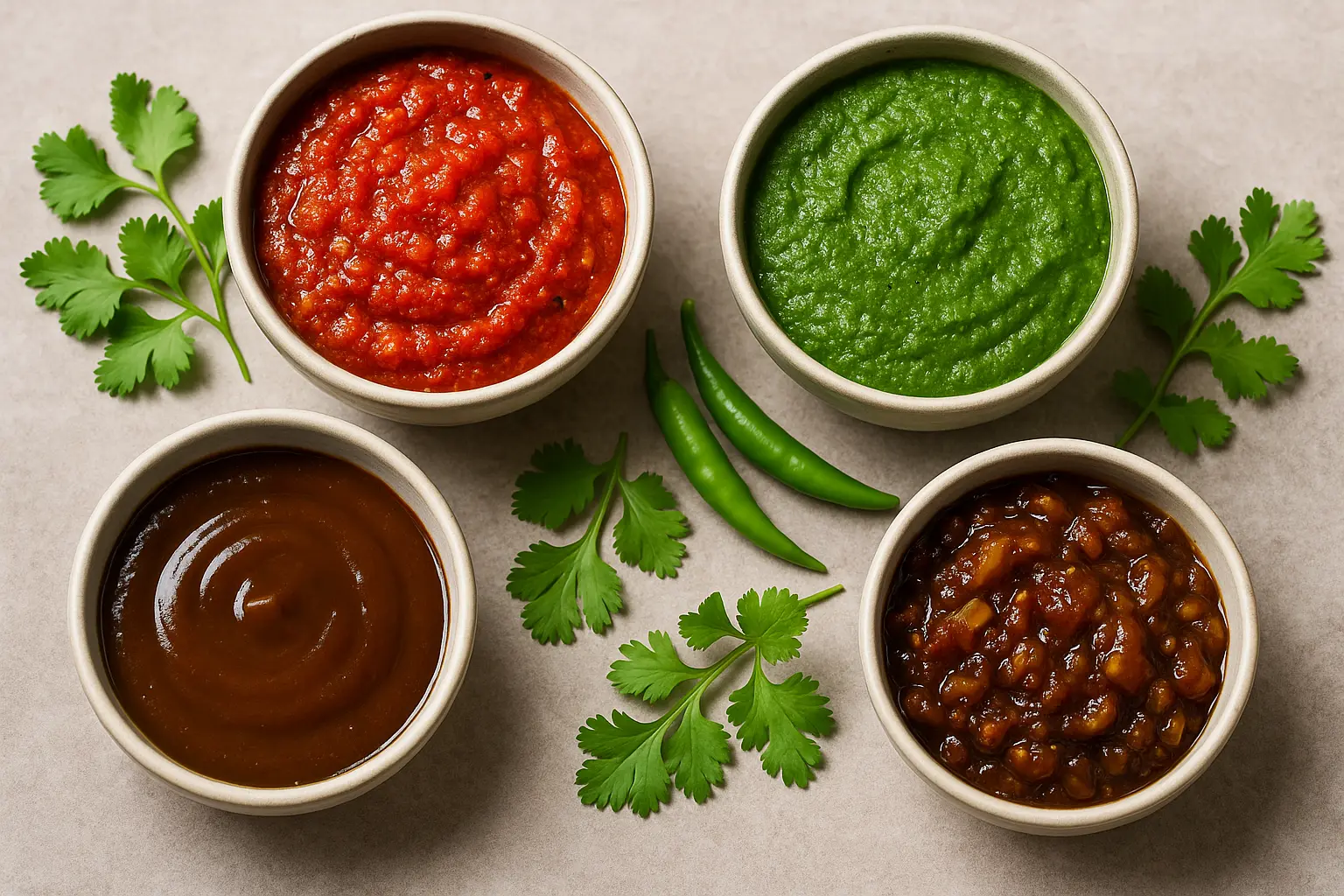
Indian food is more than curries, rice, or breads—it’s about the small but powerful additions that bring balance and magic to every bite. Chutneys are one of those unsung heroes. Whether you’re dipping a crisp samosa, pairing with hot pakoras, or spreading onto soft rotis, chutneys deliver a burst of sweet, tangy, or spicy goodness that transforms a simple dish into an unforgettable experience.
In this blog, we’ll explore the diverse world of Indian chutneys, focusing on sweet and spiced variations. You’ll learn their history, cultural importance, key ingredients, must-try recipes, and clever tips for storage and usage.
The Essence of Indian Chutneys
Chutney (from the Hindi word chatni, meaning “to lick”) is not just a condiment—it’s a tradition. Every Indian household has its version, whether made daily in small batches or stored in jars for long use. These sauces or relishes balance sweetness, tang, heat, and spice in ways that complement the richness of Indian meals.
- Sweet chutneys mellow the heat of curries and fried snacks.
- Spiced chutneys awaken the palate with chili, ginger, or earthy masalas.
- Together, they create harmony—every mouthful layered with contrast.
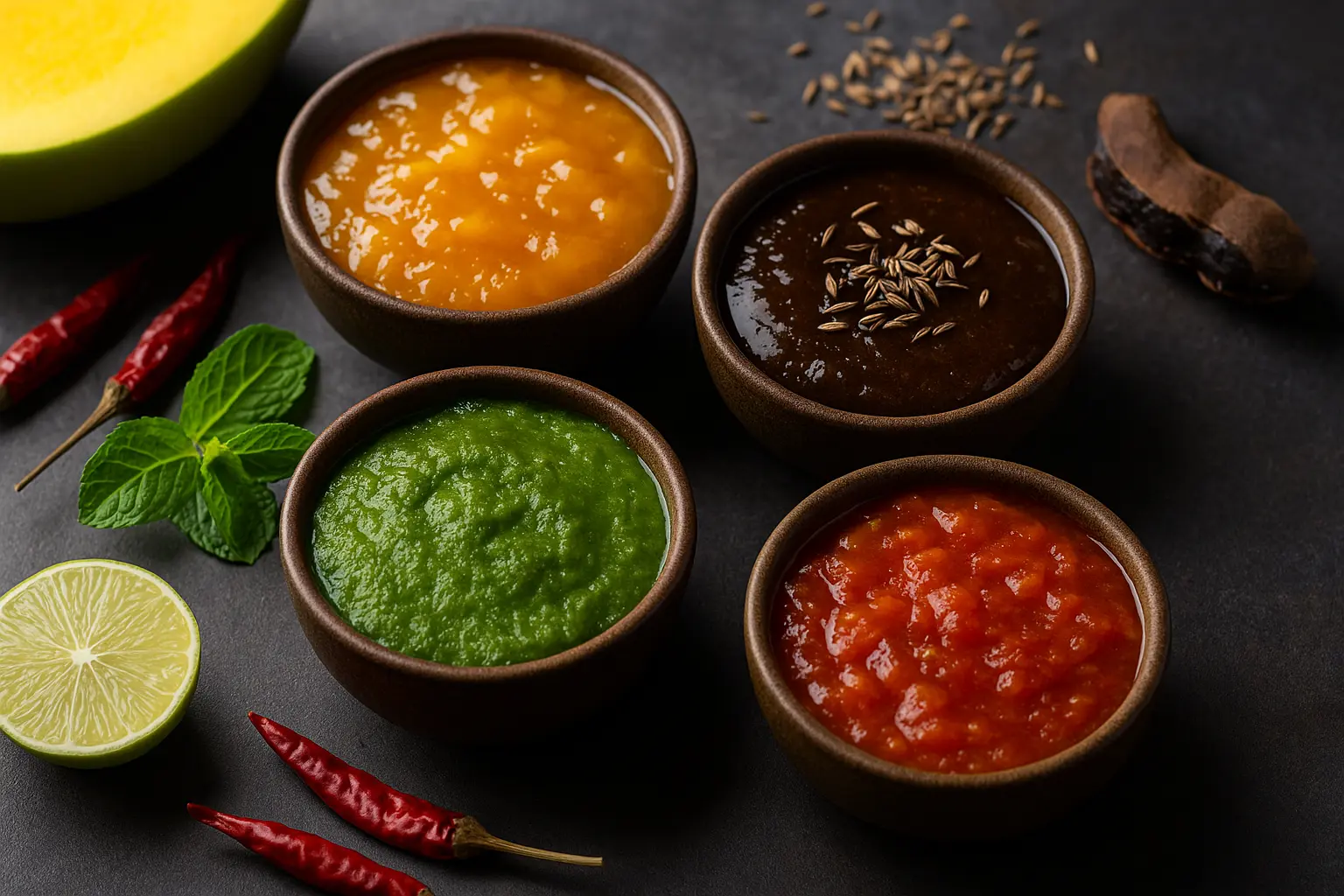
Types of Sweet and Spiced Chutneys
Here are the most beloved chutneys you’ll encounter across India:
1. Tamarind Chutney (Imli Ki Chutney)
- Taste Profile: Sweet, tangy, mildly spiced
- Pairs With: Samosas, bhel puri, pani puri, aloo tikki
- Why Loved: The sticky richness of tamarind pulp blended with jaggery (unrefined cane sugar) gives this chutney its iconic sweet-tangy kick.
2. Mango Chutney (Aam Ki Chutney)
- Taste Profile: Can be sweet or spicy depending on ripe or raw mango
- Pairs With: Parathas, grilled meats, snacks
- Why Loved: Ripe mango adds fruity sweetness, while raw mango versions are spiced and tangy—perfect for summer heat.
3. Mint-Coriander Chutney (Pudina-Dhaniya Chutney)
- Taste Profile: Refreshing, spicy, herbaceous
- Pairs With: Kebabs, sandwiches, dosas, pakoras
- Why Loved: The freshness of herbs balances fried foods beautifully.
4. Tomato Chutney
- Taste Profile: Tangy, slightly sweet, with garlic and chili undertones
- Pairs With: Idlis, dosas, chapatis, rice
- Why Loved: Its versatility—it’s a South Indian classic that’s quick to make.
5. Date and Tamarind Chutney (Khajur-Imli Chutney)
- Taste Profile: Rich, sweet, slightly tangy
- Pairs With: Chaat dishes, pani puri, samosas
- Why Loved: Dates add a caramel-like sweetness that makes this chutney indulgent yet balanced.
Key Ingredients in Sweet and Spiced Chutneys
- Tamarind – for tang and depth
- Jaggery or Sugar – natural sweetness
- Fruits (mango, apple, pineapple, dates) – seasonal variety
- Herbs (mint, coriander, curry leaves) – freshness
- Spices (cumin, chili powder, ginger, fennel) – warmth and heat
- Salt & Black Salt – enhances all other flavors
Classic Recipes You Can Try at Home
Below are detailed recipes to prepare some all-time favorite chutneys:
Tamarind Chutney Recipe
Ingredients:
- Tamarind pulp – ½ cup
- Jaggery – ¾ cup (adjust for sweetness)
- Roasted cumin powder – 1 tsp
- Red chili powder – ½ tsp
- Black salt – ½ tsp
- Water – 1 ½ cups
Method:
- Boil tamarind pulp with water until soft.
- Add jaggery and stir until dissolved.
- Mix in cumin, chili powder, and black salt.
- Simmer until thick.
- Cool and store in jars.
Mango Chutney (Ripe Mango Version)
Ingredients:
- Ripe mangoes – 2 large, chopped
- Sugar – ½ cup
- Vinegar – 2 tbsp
- Red chili flakes – 1 tsp
- Ginger – 1 tsp, grated
- Salt – to taste
Method:
- Cook mango with sugar and vinegar until pulpy.
- Add ginger, chili flakes, and salt.
- Simmer until sticky.
- Cool and store.
Mint-Coriander Chutney
Ingredients:
- Fresh mint leaves – 1 cup
- Fresh coriander leaves – 1 cup
- Green chilies – 2
- Lemon juice – 1 tbsp
- Salt – to taste
- Water – ¼ cup
Method:
- Blend all ingredients into a smooth paste.
- Adjust consistency with water.
- Serve fresh with snacks.
Tomato Chutney (South Indian Style)
Ingredients:
- Tomatoes – 4 large, chopped
- Garlic – 3 cloves
- Red chilies – 3
- Oil – 2 tbsp
- Salt – to taste
Method:
- Heat oil and sauté garlic and chilies.
- Add tomatoes and cook until soft.
- Blend to a paste and season with salt.
Serving Ideas: How to Use Chutneys
- With Snacks: Pair tamarind chutney with samosas or pakoras.
- In Chaat: Drizzle date-tamarind chutney on bhel puri or sev puri.
- As Spreads: Mango chutney on sandwiches, wraps, or rotis.
- With Meals: Tomato chutney alongside dosas, idlis, or rice.
- Fusion Ideas: Use chutney as marinades, pizza toppings, or dipping sauces for cheese platters.
Tips for Storage and Preservation
- Store chutneys in sterilized glass jars.
- Refrigerate fresh herb-based chutneys for up to 3 days.
- Cooked fruit-based chutneys (like mango or tamarind) last for weeks when refrigerated.
- Add a spoon of vinegar or lemon juice to extend shelf life.
- Freeze in small portions for long-term use.
Nutritional Benefits
- Tamarind aids digestion and is rich in antioxidants.
- Mint and coriander boost metabolism and immunity.
- Mango provides Vitamin A and C.
- Tomatoes are full of lycopene and Vitamin C.
- Spices like cumin and ginger improve gut health.
So chutneys aren’t just tasty—they’re functional food too!
Regional Chutney Variations
- North India: Tamarind-date chutneys dominate street foods.
- South India: Tomato, coconut, and curry-leaf chutneys shine.
- East India: Mustard-based chutneys are common.
- West India: Sweet mango chutneys define summer spreads.
Each region personalizes chutneys to its seasonal produce and taste preferences.
Modern & Fusion Takes
Chutneys are now finding their way into modern kitchens worldwide:
- Served with cheese boards in Europe.
- Used as burger spreads in Australia.
- Added to fusion tacos and wraps in the US.
This global appeal proves chutneys are not just traditional—they’re timeless.
Final Thoughts
Sweet and spiced Indian chutneys are more than condiments—they’re cultural bridges, blending tradition with innovation. From the tang of tamarind to the refreshing kick of mint, these versatile sauces can elevate everyday meals, snacks, or even global fusion dishes.
Next time you cook Indian food, don’t forget the chutney—it might just be the star of your table.

Leave a comment
Your email address will not be published. Required fields are marked *