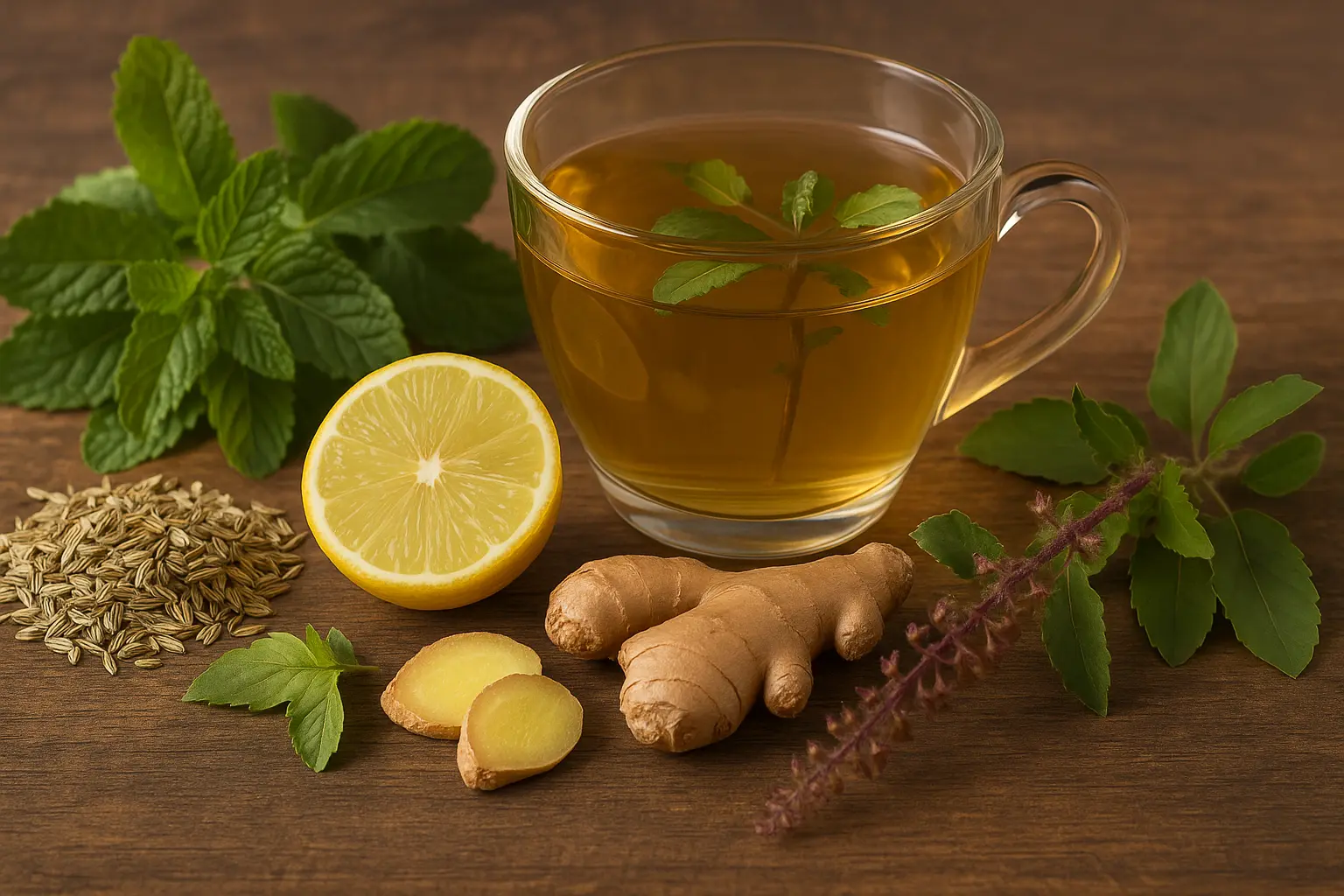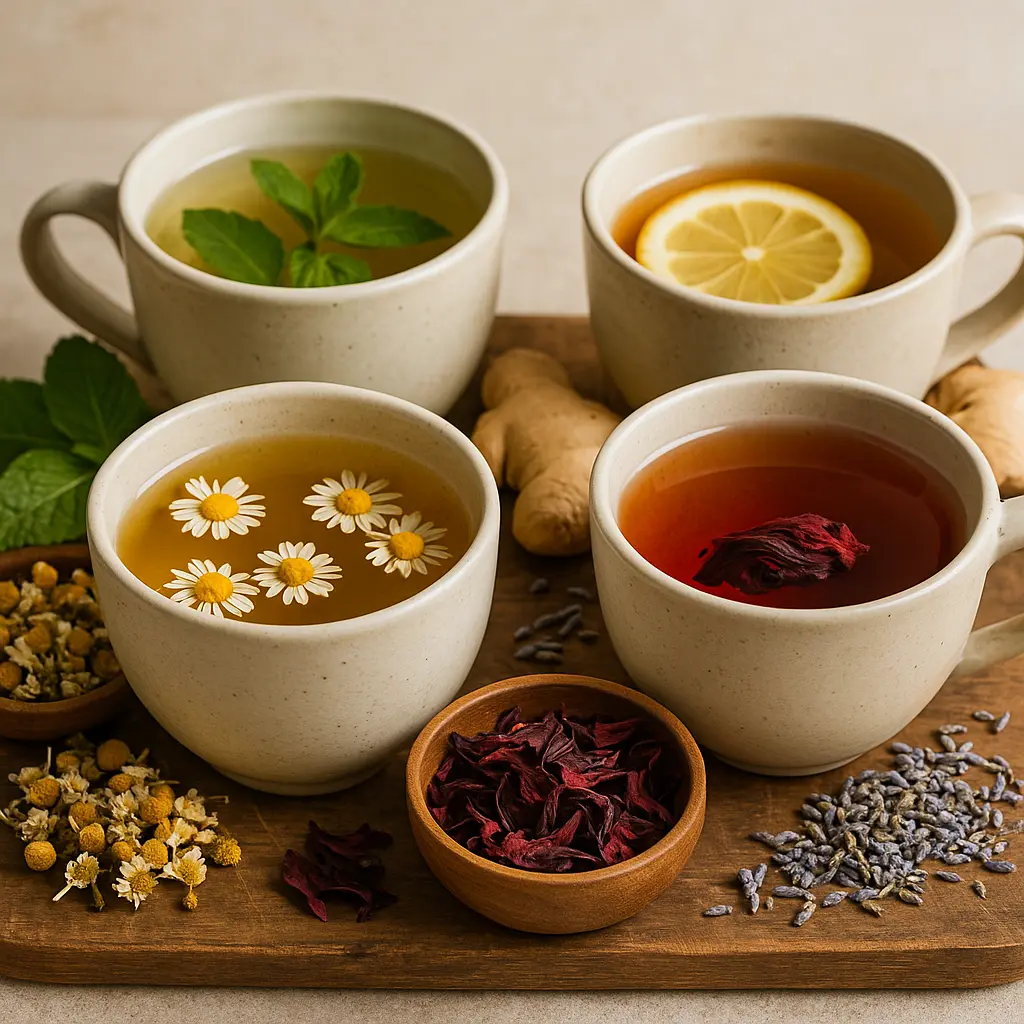
Herbal teas have been cherished for centuries across cultures, not just as warm, comforting beverages but also as natural remedies for relaxation, digestion, sleep, and overall wellness. Unlike black or green tea, which are derived from the Camellia sinensis plant and often contain caffeine, herbal teas are typically caffeine-free and made from a wide variety of dried herbs, flowers, spices, fruits, and roots.
For those seeking stress relief or better sleep, herbal teas are more than a beverage—they’re part of a self-care ritual. Ayurveda, the ancient Indian system of holistic healing, has long recommended herbs such as tulsi (holy basil), ashwagandha, and chamomile for balancing the mind and body. Similarly, traditional Chinese medicine and European folk remedies have championed teas made from calming herbs like lavender, lemon balm, and passionflower.
In this blog, we’ll explore the world of soothing herbal teas, their Ayurvedic roots, key benefits, preparation methods, and recipes you can make at home.
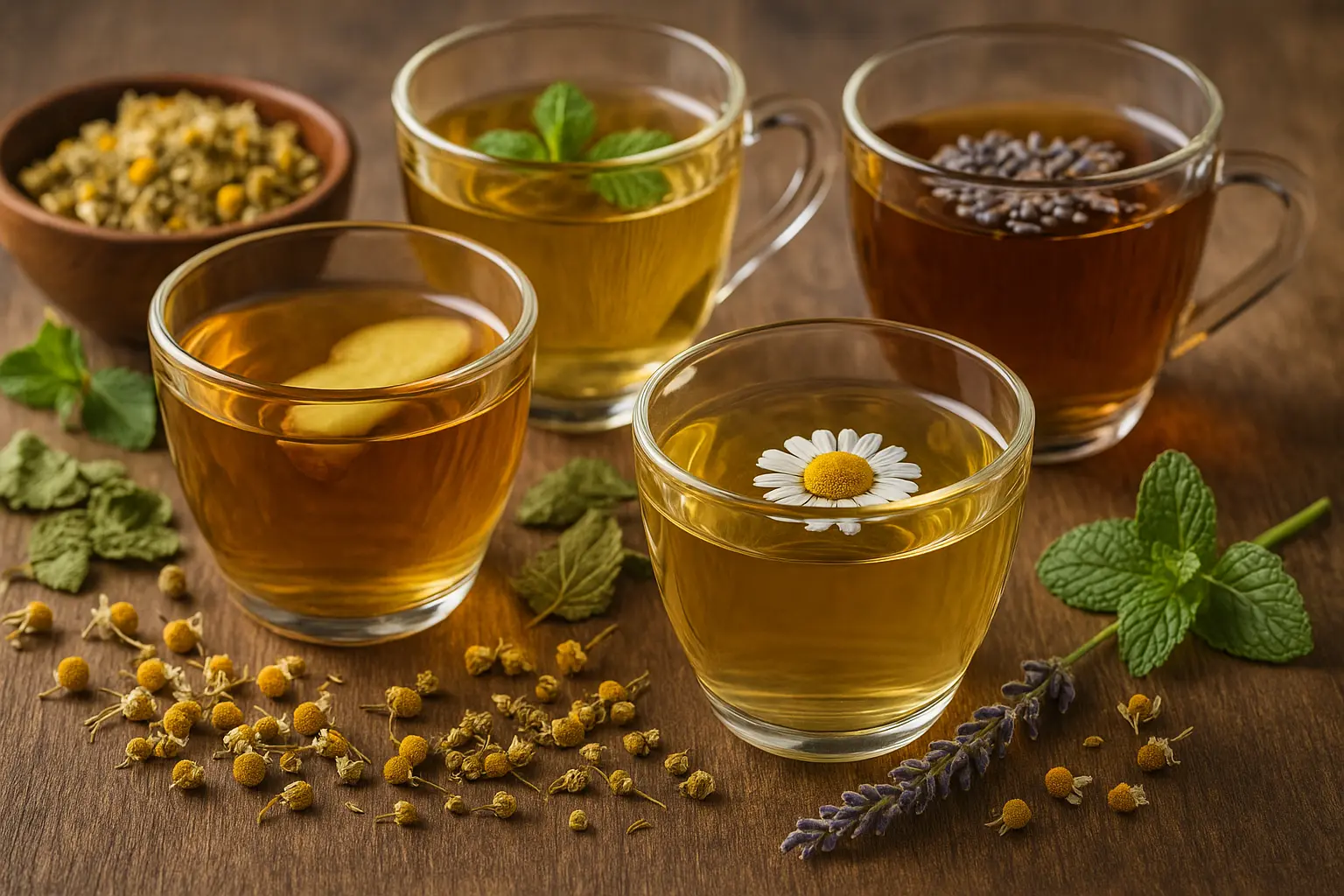
Why Choose Herbal Teas for Relaxation?
1. Caffeine-Free Calm
Unlike coffee or black tea, most herbal teas contain no caffeine. This makes them an excellent choice for evening rituals, reducing stimulation before bedtime.
2. Stress Relief and Anxiety Management
Herbal blends often contain adaptogens—plants that help the body adapt to stress and restore balance. Tulsi and ashwagandha are two prime examples.
3. Improved Sleep Quality
Chamomile, lavender, and valerian root teas are popular natural sleep aids, helping to relax muscles and quiet the mind.
4. Digestive and Anti-Inflammatory Benefits
Many herbs—like ginger, peppermint, and fennel—also soothe the digestive system, which can indirectly support relaxation by easing physical discomfort.
Ayurvedic Perspective on Herbal Teas
Ayurveda emphasizes balance between the three doshas—Vata, Pitta, and Kapha. Herbal teas can be tailored to bring harmony depending on which dosha is dominant or imbalanced.
- For Vata (air + ether): Warm, grounding teas with cinnamon, ginger, tulsi, and licorice root.
- For Pitta (fire + water): Cooling teas with rose petals, mint, fennel, and coriander seeds.
- For Kapha (earth + water): Energizing teas with cloves, black pepper, cardamom, and ginger.
By aligning teas with your body’s constitution, you can create personalized blends that not only relax but also heal.
Top Relaxing Herbal Teas to Try
1. Chamomile Tea
- Flavor Profile: Light, floral, slightly sweet.
- Benefits: Eases stress, promotes sleep, supports digestion.
- Best Time to Drink: Before bedtime.
2. Tulsi (Holy Basil) Tea
- Flavor Profile: Earthy, slightly spicy, clove-like aroma.
- Benefits: Adaptogen, relieves anxiety, balances all doshas in Ayurveda.
- Best Time to Drink: Afternoon or evening.
3. Lavender Tea
- Flavor Profile: Floral, aromatic, mildly bitter.
- Benefits: Relieves nervous tension, supports restful sleep, reduces headaches.
- Best Time to Drink: Evening wind-down.
4. Lemon Balm Tea
- Flavor Profile: Lightly citrusy with a hint of mint.
- Benefits: Uplifts mood, calms anxiety, supports digestion.
- Best Time to Drink: Late afternoon or evening.
5. Valerian Root Tea
- Flavor Profile: Earthy, pungent (acquired taste).
- Benefits: Strong sedative properties, aids insomnia.
- Best Time to Drink: At night (avoid daytime use).
6. Ashwagandha Tea
- Flavor Profile: Slightly bitter, earthy.
- Benefits: Reduces cortisol (stress hormone), boosts energy and resilience.
- Best Time to Drink: Morning or early evening.
7. Ginger-Licorice Blend
- Flavor Profile: Sweet and spicy.
- Benefits: Aids digestion, soothes sore throat, calms nerves.
- Best Time to Drink: After meals or during seasonal changes.
DIY Herbal Tea Recipes
1. Calming Chamomile-Lavender Tea
Ingredients:
- 1 tbsp dried chamomile flowers
- 1 tsp dried lavender buds
- 1 tsp honey (optional)
Method:
- Add chamomile and lavender to a teapot.
- Pour 1 cup hot water (just off boil).
- Steep for 5–7 minutes.
- Strain and sweeten lightly if desired.
2. Tulsi & Ginger Ayurvedic Tea
Ingredients:
- 1 tbsp dried tulsi leaves
- ½ tsp grated fresh ginger
- 2 cups water
- 1 tsp jaggery or honey (optional)
Method:
- Boil tulsi and ginger in water for 5 minutes.
- Strain into a cup.
- Add sweetener if desired.
3. Lemon Balm & Mint Evening Blend
Ingredients:
- 1 tbsp dried lemon balm
- 1 tsp dried spearmint or peppermint
- 1 slice fresh lemon
Method:
- Place herbs in a cup.
- Add hot water and steep for 5 minutes.
- Add lemon slice before serving.
4. Ashwagandha Bedtime Tea
Ingredients:
- 1 tsp dried ashwagandha root powder
- 1 cup water
- ½ tsp cinnamon
- 1 tsp honey
Method:
- Simmer ashwagandha root in water for 10 minutes.
- Strain and add cinnamon and honey.
5. Valerian & Chamomile Sleepy Tea
Ingredients:
- 1 tsp valerian root
- 1 tbsp chamomile flowers
- 1 tsp lemon balm
Method:
- Add herbs to boiling water.
- Cover and steep for 10 minutes.
- Strain and drink before bedtime.
Tips for Brewing the Perfect Herbal Tea
- Use Fresh, Quality Ingredients – Organic, pesticide-free herbs provide better flavor and medicinal value.
- Mind the Water Temperature – Most herbs release their benefits when steeped in just-boiled water (around 95°C).
- Cover While Steeping – Helps trap essential oils and aroma.
- Steep Time Matters – 5–10 minutes is standard, but roots like valerian or ashwagandha may need longer simmering.
- Experiment with Blends – Combine herbs for tailored benefits (e.g., chamomile + lemon balm for sleep).
Lifestyle Rituals with Herbal Teas
Drinking herbal tea is not only about its ingredients but also the ritual. To enhance relaxation:
- Create a Tea Corner: Dedicate a quiet spot in your home for tea time.
- Mindful Drinking: Sip slowly, noticing aroma and flavor.
- Pair with Relaxation Techniques: Practice deep breathing, meditation, or light reading while sipping.
- Evening Routine: Replace screen time with a calming tea ritual before bed.
Seasonal Herbal Tea Recommendations
- Winter: Ginger-tulsi, cinnamon-clove, chamomile.
- Summer: Mint-lemon balm, hibiscus, rose petal infusions.
- Monsoon: Tulsi-ginger-licorice for immunity.
- Spring: Lavender-chamomile, lemon balm, jasmine tea.
Safety Considerations
While herbal teas are natural, not all are suitable for everyone.
- Pregnancy & Nursing: Avoid strong herbs like valerian or high doses of licorice.
- Medication Interactions: Herbs such as St. John’s Wort and valerian may interfere with prescriptions.
- Allergies: Chamomile may trigger reactions in those allergic to ragweed.
Always consult with a healthcare professional if you’re unsure.
Conclusion: A Cup of Calm Awaits
Herbal teas are more than beverages—they’re holistic experiences that nurture body, mind, and spirit. From the floral notes of chamomile and lavender to the grounding earthiness of tulsi and ashwagandha, these blends bring centuries of tradition into your cup.
Whether you’re seeking stress relief, better sleep, or simply a mindful moment of pause, there’s an herbal tea for you. Make it part of your daily wellness ritual, and let nature’s remedies guide you into relaxation.

Leave a comment
Your email address will not be published. Required fields are marked *