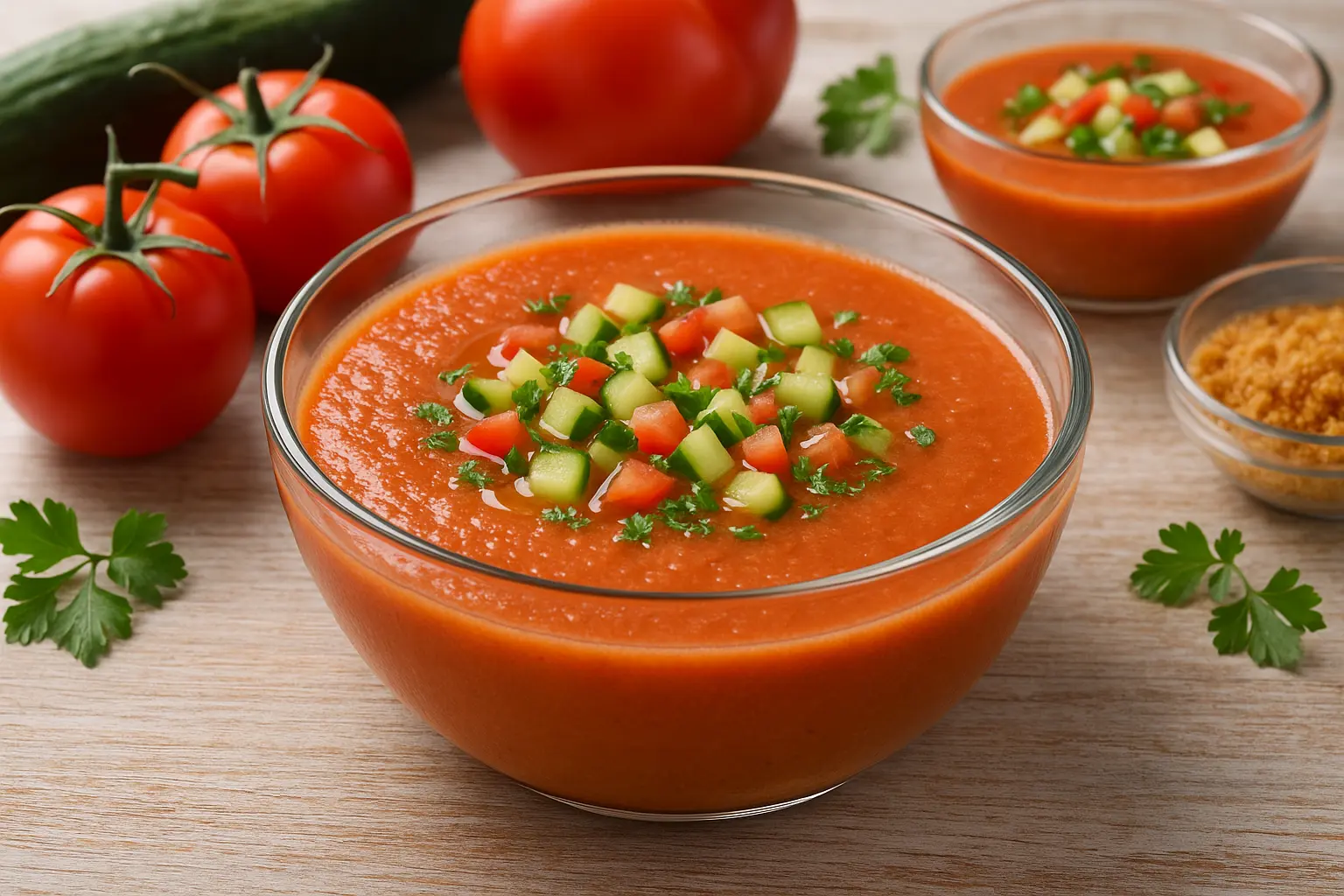
When the sun blazes and the kitchen feels like an oven, few dishes deliver the cool, crisp relief of gazpacho. This chilled Spanish soup has long been a summer staple, celebrated for its refreshing flavors, nutrient-rich ingredients, and effortless preparation. Whether you’re seeking the traditional Andalusian version or adventurous global twists, gazpacho offers something for everyone.
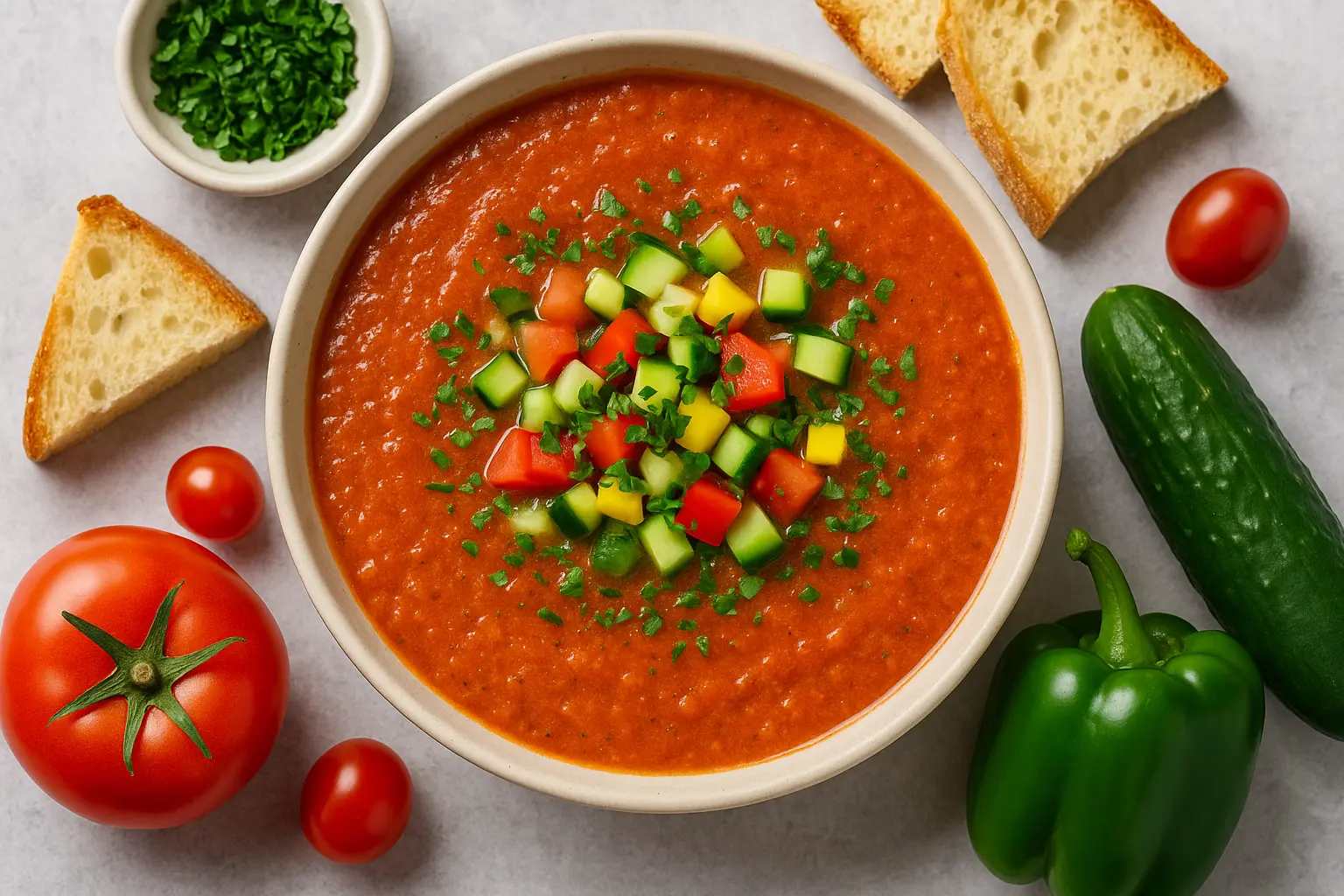
1. A Quick Dive Into Gazpacho’s Origins
Gazpacho hails from Andalusia, southern Spain, where scorching summers demanded inventive, cooling foods. Early versions were made with stale bread, olive oil, garlic, vinegar, and water—simple peasant fare that sustained workers in the fields.
Tomatoes, peppers, and cucumbers, now seen as essential, were later additions introduced after the Columbian exchange. Over centuries, gazpacho evolved into a colorful, vegetable-rich soup, often served chilled with a drizzle of olive oil.
What makes gazpacho unique is its:
- No-cook preparation: Ingredients are blended raw, retaining freshness.
- Versatility: It adapts beautifully to local produce and personal tastes.
- Global appeal: From Michelin-star menus to home kitchens, gazpacho is both humble and sophisticated.
2. The Classic Andalusian Gazpacho
Before experimenting with mangoes or basil, it’s essential to master the traditional Spanish recipe.
Ingredients (Serves 4–6)
- 6 ripe tomatoes, peeled and chopped
- 1 cucumber, peeled and diced
- 1 green bell pepper, chopped
- 2 cloves garlic
- 2 slices stale bread (soaked in water and squeezed)
- 3 tbsp extra virgin olive oil
- 2 tbsp sherry vinegar (or red wine vinegar)
- Salt to taste
- Cold water or ice cubes (to thin, if needed)
Method
- Place tomatoes, cucumber, pepper, garlic, and bread in a blender.
- Add olive oil, vinegar, and salt. Blend until smooth.
- Adjust texture with cold water or ice.
- Chill for at least 2 hours before serving.
- Garnish with diced cucumber, croutons, or a swirl of olive oil.
This is the gazpacho you’ll find in Andalusian homes: creamy, tangy, and deeply satisfying.
3. The Many Faces of Gazpacho
Gazpacho is not just red and tomato-based. Spain itself offers regional variations:
- Salmorejo (Cordoba): Thicker, creamier, with more bread and olive oil.
- Ajoblanco: A white almond and garlic gazpacho, often garnished with grapes.
- Extremaduran Gazpacho: Rustic, chunkier, closer to a salad-soup hybrid.
Each has its charm, showcasing how a simple concept adapts to different climates and cultures.
4. Modern and Creative Twists
Today’s chefs and home cooks often reinvent gazpacho with unexpected ingredients. Here are some creative ideas:
🍑 Peach & Tomato Gazpacho
- Adds ripe peaches for sweetness.
- Perfectly balances savory and fruity notes.
- Garnish with mint for a refreshing finish.
🥭 Mango & Red Pepper Gazpacho
- Tropical vibes, excellent for parties.
- Pairs beautifully with grilled prawns or tofu.
🥒 Green Gazpacho
- Made with spinach, avocado, green grapes, and cucumber.
- Creamy and nutrient-dense, ideal for vegans seeking superfoods.
🍉 Watermelon Gazpacho
- Sweet, cooling, and visually stunning.
- Great choice for picnics and outdoor dining.
5. Global Inspirations
Gazpacho’s adaptability means it can take cues from cuisines worldwide:
- Mexican Gazpacho: Infused with chili, lime, and cilantro, served with tortilla chips.
- Japanese Gazpacho: Uses miso, ginger, and sesame oil for umami depth.
- Middle Eastern Gazpacho: Inspired by tabbouleh; includes parsley, bulgur, and pomegranate seeds.
- Indian Fusion Gazpacho: Spiced with cumin, coriander, and chili, garnished with yogurt.
These versions respect gazpacho’s spirit while offering new taste experiences.
6. Nutrition Benefits
Gazpacho isn’t just refreshing—it’s a nutritional powerhouse.
- Hydration: With cucumbers, tomatoes, and peppers, it’s water-rich.
- Vitamins: High in vitamins A, C, K, and antioxidants like lycopene.
- Fiber: Helps digestion and satiety.
- Healthy fats: Olive oil adds monounsaturated fats, heart-friendly and filling.
- Low calorie: Typically under 200 calories per serving.
For vegans and vegetarians, gazpacho is a perfect meal starter or light lunch.
7. Pairing Ideas
What goes with gazpacho? Try these combinations:
- Crusty bread or garlic toasts
- Tapas platters: olives, grilled vegetables, patatas bravas
- Light proteins: grilled tofu, shrimp skewers, or chickpea salad
- Summer beverages: chilled white wine, sangria, or mocktails
8. Tips for Perfect Gazpacho
- Use ripe produce: Flavor depends entirely on ingredient quality.
- Blend well, then strain: For ultra-smooth texture.
- Chill thoroughly: At least 2 hours for flavors to meld.
- Balance acidity: Vinegar is essential—don’t skip it.
- Experiment with toppings: Croutons, diced veggies, nuts, or herbs.
9. Step-by-Step Guide: Hosting a Gazpacho Bar
Want to impress at a summer party? Set up a DIY gazpacho bar:
- Offer a base gazpacho (classic tomato).
- Provide toppings: cucumber cubes, herbs, nuts, seeds, diced fruits.
- Add global variations in smaller bowls.
- Let guests customize their soup bowls.
It’s interactive, healthy, and fun.
10. Gazpacho Beyond Summer
Though most associate it with hot weather, gazpacho can adapt year-round:
- Autumn: Add roasted pumpkin or squash.
- Winter: Try a warm tomato-garlic gazpacho (served slightly heated).
- Spring: Emphasize fresh peas, herbs, and asparagus.
11. Troubleshooting Common Mistakes
- Too watery? Add more bread or avocado.
- Too sour? Balance with a pinch of sugar or sweet fruit.
- Too thick? Dilute with chilled water.
- Bland? Increase salt, vinegar, or garlic.
12. Gazpacho Meal Prep & Storage
- Make ahead: Flavors improve after a few hours.
- Storage: Keeps 2–3 days refrigerated in airtight jars.
- Freezing: Possible but may affect texture—best for fruit-based versions.
13. Cultural Significance & Modern Popularity
Gazpacho embodies more than flavor; it reflects Mediterranean food culture:
- Simplicity, fresh ingredients, minimal cooking.
- Sustainability—using stale bread and seasonal produce.
- Rising popularity with plant-based eating trends worldwide.
Chefs globally now showcase gazpacho as part of fine dining menus, proof of its timeless charm.
14. Conclusion
Gazpacho isn’t just a soup; it’s a celebration of summer. From its humble Andalusian origins to creative global fusions, it remains one of the most versatile vegan dishes you can prepare without breaking a sweat.
So the next time the temperature soars, skip the stove and blend up a bowl of gazpacho. Whether traditional, fruity, or fusion, it will cool you down, nourish your body, and wow your taste buds.

Leave a comment
Your email address will not be published. Required fields are marked *