For years, gluten-free baking had a bad reputation—cakes that crumbled apart, tasted dry, or felt gritty compared to their wheat-based counterparts. But today, thanks to innovative flour blends, new baking techniques, and creative ingredient swaps, gluten-free cakes can rival (and sometimes surpass) traditional cakes in flavor and texture.
This guide will explore everything you need to know to create gluten-free cakes that don’t taste like compromise. We’ll cover the basics of gluten-free flours, techniques to improve structure and moisture, and share recipes that will leave even the most skeptical guests asking for seconds.
Whether you’re gluten-intolerant, have celiac disease, or are simply baking for friends and family with dietary restrictions, this article ensures you’ll have a go-to list of reliable, indulgent cakes for every occasion.
Why Gluten-Free Doesn’t Mean Flavor-Free
Before diving into recipes, it’s important to address the biggest misconception: gluten-free automatically means bland or inferior.
The truth is, gluten is only one component of baking—it provides elasticity, structure, and chewiness. But with the right combinations of gluten-free flours and binders, you can achieve the same qualities without sacrificing taste. In fact, gluten-free cakes often showcase bold flavors because the absence of wheat allows ingredients like almond flour, coconut, or fruit to shine more vibrantly.
Understanding Gluten-Free Flours
One of the keys to successful gluten-free cakes is choosing the right flour—or better yet, blending flours. Here’s a quick breakdown:
- Rice Flour: Light texture, commonly used in blends. Can be slightly gritty if overused.
- Almond Flour: Adds moisture, richness, and a subtle nutty flavor. Excellent for dense cakes.
- Coconut Flour: Highly absorbent, adds fiber, best used in small amounts.
- Oat Flour (gluten-free certified): Brings a mild flavor and extra softness.
- Tapioca & Potato Starch: Add chewiness and elasticity, mimicking gluten’s role.
- Sorghum & Millet Flour: Nutty, whole-grain taste, great for balance in blends.
Most successful recipes combine two or more flours, along with starches, to create a balanced texture. Alternatively, store-bought gluten-free flour blends (with xanthan gum or guar gum included) simplify the process for beginners.
Tips for Perfect Gluten-Free Cakes
- Moisture is key: Add ingredients like yogurt, applesauce, or buttermilk to prevent dryness.
- Binders matter: Use xanthan gum, guar gum, or psyllium husk to replicate gluten’s binding effect.
- Don’t overbake: Gluten-free cakes often dry faster. Remove from the oven as soon as a skewer comes out clean.
- Rest the batter: Let it sit for 15 minutes before baking; this hydrates flours and improves texture.
- Use smaller pans: Gluten-free batters sometimes rise less, so 8-inch pans work better than 9-inch for tall cakes.
Recipes You’ll Love
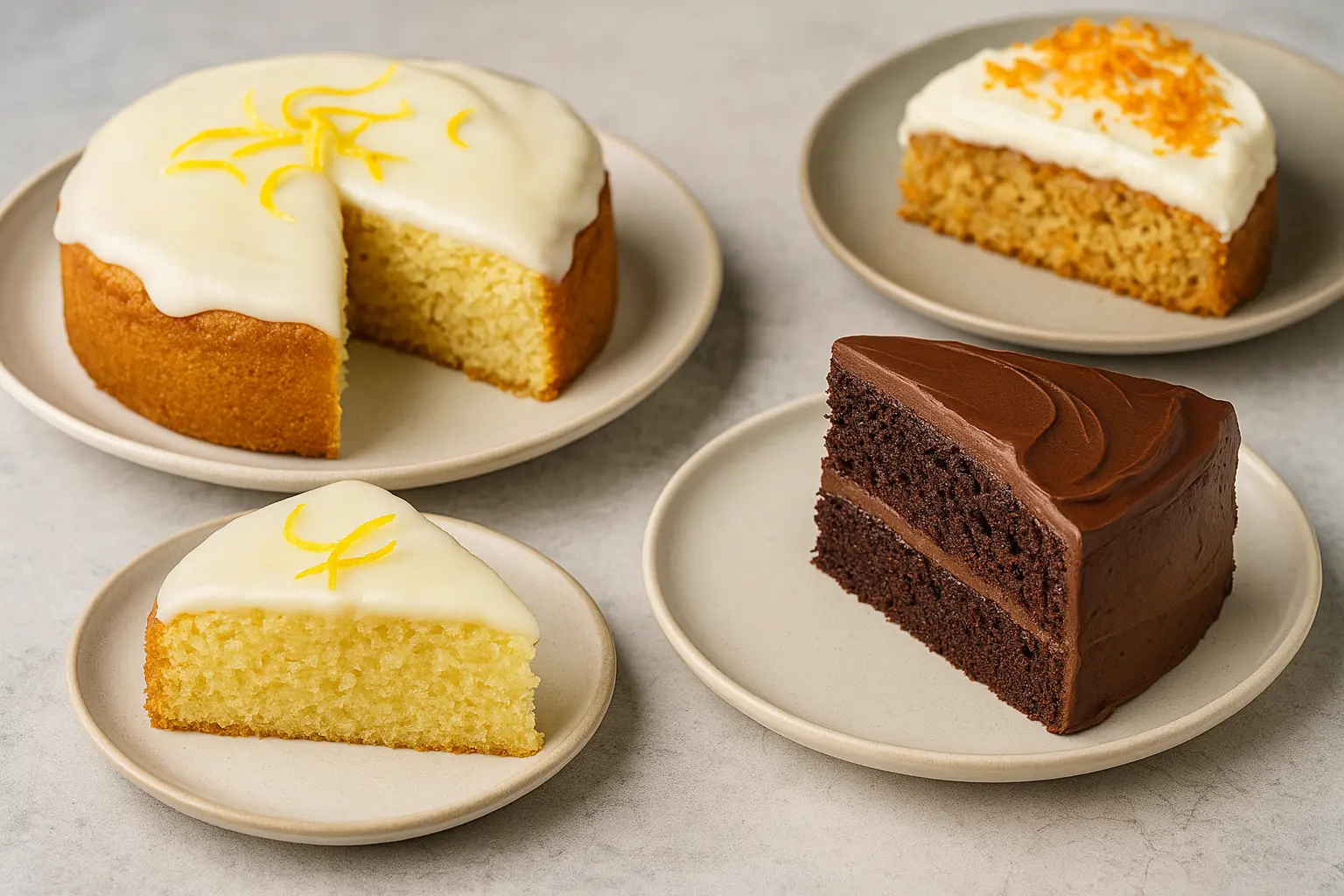
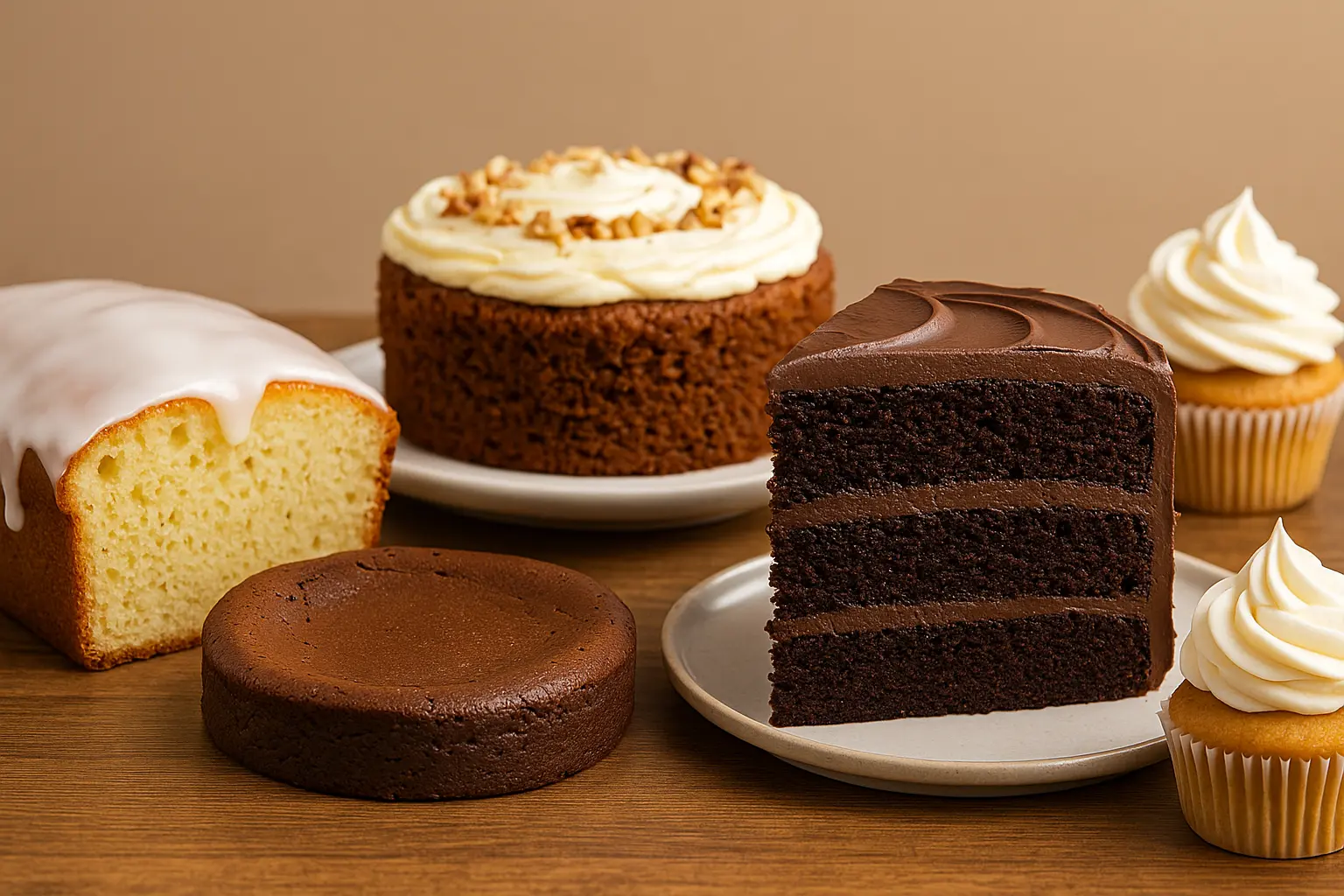
1. Classic Gluten-Free Chocolate Cake
A moist, rich chocolate sponge layered with silky frosting.
- Key ingredients: Gluten-free flour blend, cocoa powder, buttermilk, coffee (enhances chocolate flavor).
- Texture: Soft crumb, rich flavor.
- Best for: Birthdays, celebrations.
2. Almond Flour Lemon Drizzle Cake
Bright, citrusy, and naturally moist thanks to almond flour.
- Key ingredients: Almond flour, lemon zest, eggs, honey.
- Texture: Dense yet tender.
- Best for: Tea-time treats, spring gatherings.
3. Gluten-Free Vanilla Sponge
A versatile base for layered cakes or cupcakes.
- Key ingredients: Gluten-free flour blend, butter, vanilla extract.
- Texture: Light, fluffy, classic.
- Best for: Birthdays, weddings.
4. Carrot & Walnut Gluten-Free Cake
A wholesome, spiced cake packed with flavor and texture.
- Key ingredients: Almond flour, grated carrots, cinnamon, walnuts, cream cheese frosting.
- Texture: Moist, hearty.
- Best for: Family gatherings, autumn bakes.
5. Flourless Chocolate Torte
Rich, fudgy, and naturally gluten-free.
- Key ingredients: Dark chocolate, eggs, butter, sugar.
- Texture: Dense, brownie-like.
- Best for: Dinner parties, indulgent desserts.
6. Coconut & Pineapple Cake (Gluten-Free Tropical Delight)
Transport yourself to the tropics with every bite.
- Key ingredients: Coconut flour, pineapple chunks, cream cheese frosting.
- Texture: Moist, fruity.
- Best for: Summer parties, picnics.
7. Gluten-Free Coffee & Walnut Cake
Perfect for coffee lovers craving a rich sponge with nutty crunch.
- Key ingredients: Gluten-free flour, brewed espresso, walnuts.
- Texture: Light but flavorful.
- Best for: Afternoon tea, casual gatherings.
Baking Science Behind Gluten-Free Cakes
Why do gluten-free cakes sometimes fail? It’s usually one of three reasons:
- Too dry: Lack of moisture-rich ingredients.
- Crumbly texture: No binders or too much flour.
- Dense cake: Overmixing batter, causing collapse during baking.
The science lies in balancing starch for structure, protein (from eggs or nut flours) for stability, and fats for tenderness. Once you understand this balance, your cakes will consistently turn out delicious.
Decorating Gluten-Free Cakes
Decoration is where you can really shine. Gluten-free cakes pair beautifully with:
- Buttercream frostings (classic or flavored).
- Whipped cream and fresh fruit.
- Chocolate ganache drips.
- Edible flowers or nut toppings.
Because gluten-free sponges can be slightly more delicate, handle carefully when layering or carving. Chill cakes before frosting to avoid crumbling.
Storing & Freezing Gluten-Free Cakes
- Storage: Keep in an airtight container at room temperature for up to 3 days.
- Freezing: Most gluten-free cakes freeze beautifully. Wrap tightly in cling film and foil, then thaw at room temp.
Pro tip: Frost cakes after thawing for best results.
Occasions to Serve Gluten-Free Cakes
- Birthdays & Celebrations: No one will even notice it’s gluten-free.
- Festive Gatherings: Add seasonal spices or fruits.
- Everyday Treats: Quick loaves or muffins.
- Special Diets: Perfect for inclusive parties where dietary restrictions exist.
Gluten-Free Baking FAQs
Q: Do I always need xanthan gum?
A: Not always. Some recipes work fine without it (like flourless cakes), but for light sponges, it helps maintain structure.
Q: Can I just swap regular flour with gluten-free flour 1:1?
A: If using a commercial blend that includes binders, yes. But results may vary depending on brand.
Q: How do I avoid a gritty texture?
A: Use superfine rice flour or blends that balance starch and protein. Resting the batter also helps.
Q: Are gluten-free cakes healthier?
A: Not necessarily—they’re indulgent desserts. But they’re suitable for those with gluten intolerance or celiac disease.
Final Thoughts
Gluten-free cakes no longer need to be the second-choice dessert on the table. With the right flours, techniques, and recipes, you can create cakes that are soft, moist, flavorful, and completely indulgent—without compromise.
From a fudgy flourless torte to a light vanilla sponge, these recipes ensure everyone can enjoy a slice of cake, gluten-free or not. Baking inclusively doesn’t mean sacrificing taste—it means expanding the world of flavor possibilities.

Leave a comment
Your email address will not be published. Required fields are marked *