Breakfast muffins are a kitchen staple—portable, versatile, and satisfying. But what happens if you don’t eat eggs or need to avoid them due to allergies, dietary preferences, or simply running out at home? The good news is that muffins don’t need eggs to be delicious, moist, and fluffy. With the right substitutions and techniques, egg-free muffins can rival (and sometimes outperform) traditional recipes.
In this guide, we’ll explore everything you need to know about making creative egg-free breakfast muffins: the science of baking without eggs, ingredient swaps, flavor combinations, storage tips, and a collection of tried-and-tested recipes. By the end, you’ll have a repertoire of muffins that are not only vegan-friendly but also nourishing, budget-friendly, and perfect for meal prep.
The Science of Baking Without Eggs
What Do Eggs Do in Muffins?
Eggs serve multiple roles in traditional baking:
Binding – They hold ingredients together.
Leavening – They trap air and create lift for fluffy textures.
Moisture – They add liquid and fat to keep bakes soft.
Structure – Proteins in eggs firm up as they bake, giving muffins stability.
Egg-Free Solutions
To replace eggs, we mimic these properties with plant-based alternatives:
Binding agents: Flaxseed meal, chia seeds, or mashed banana.
Leavening: Baking powder, baking soda + vinegar, aquafaba (chickpea water).
Moisture: Applesauce, yogurt (dairy-free), pumpkin puree, nut butters.
Structure: Oats, almond meal, or coconut flour can provide density and stability.
By combining the right substitute with the right flavor profile, we can make muffins that no one would guess are egg-free.
Essential Ingredients for Egg-Free Muffins
Dry Ingredients
All-purpose flour – A standard base that works well for most recipes.
Whole wheat flour – Adds fiber and a nutty flavor.
Oats (rolled or quick) – For texture and nutrition.
Baking powder & baking soda – Provide lift.
Spices – Cinnamon, nutmeg, cardamom for flavor depth.
Wet Ingredients
Plant-based milk – Almond, soy, oat, or coconut.
Fruit purees – Bananas, applesauce, pumpkin for moisture.
Oil or melted butter substitute – Coconut oil, olive oil, or vegan butter.
Sweeteners – Maple syrup, honey (if not strictly vegan), or coconut sugar.
Mix-Ins
Fruits: Blueberries, raspberries, apples, pears.
Nuts & seeds: Walnuts, pecans, sunflower seeds.
Add-ons: Dark chocolate chips, shredded coconut, dried cranberries.
Core Recipes: Egg-Free Muffins for Every Taste
Here are five foundational recipes, each with variations to inspire creativity.
1. Classic Vegan Banana Muffins
Ingredients:
2 ripe bananas, mashed
1/2 cup unsweetened applesauce
1/4 cup coconut oil (melted)
1/2 cup maple syrup
1 tsp vanilla extract
1 1/2 cups all-purpose flour
1 tsp baking soda
1/2 tsp baking powder
Pinch of salt
1/2 tsp cinnamon
Method:
Preheat oven to 180°C (350°F). Line a muffin tray.
Mix bananas, applesauce, oil, syrup, and vanilla.
Sift in flour, baking soda, baking powder, salt, and cinnamon. Stir gently.
Spoon into muffin cups and bake for 20–22 minutes.
Variations:
Add chopped walnuts for crunch.
Swirl in almond butter before baking.
Sprinkle dark chocolate chips for a treat.
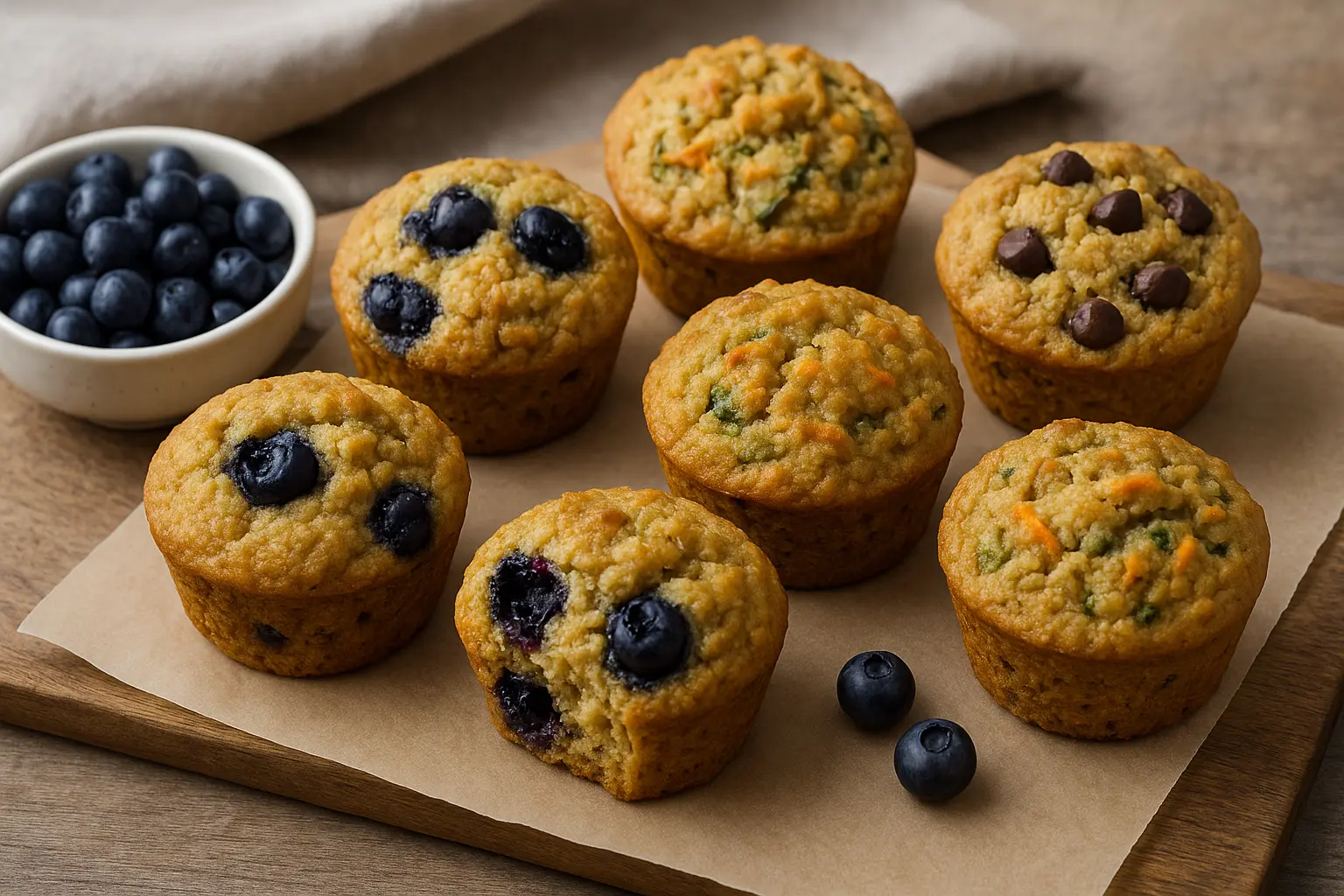
2. Blueberry Oat Breakfast Muffins
Ingredients:
1 cup rolled oats
1 1/2 cups plant-based milk (soaked for 10 mins)
1/4 cup olive oil
1/2 cup brown sugar
1 tsp lemon zest
1 tsp vanilla extract
1 1/2 cups flour (blend of whole wheat + all-purpose)
2 tsp baking powder
Pinch of salt
1 1/2 cups fresh or frozen blueberries
Method:
Combine soaked oats, milk, oil, sugar, lemon zest, and vanilla.
Add flour, baking powder, and salt. Fold in blueberries.
Bake at 180°C for 22–25 minutes.
Tips:
Toss blueberries in a teaspoon of flour before mixing—this prevents sinking.
Replace lemon zest with orange zest for variety.
3. Savory Veggie Muffins (Egg-Free)
Perfect for those who prefer a non-sweet breakfast.
Ingredients:
1 cup grated zucchini (squeezed dry)
1/2 cup grated carrot
1/2 cup corn kernels
2 tbsp nutritional yeast (for a cheesy flavor)
1 1/2 cups flour
2 tsp baking powder
1/2 tsp baking soda
1 tsp garlic powder
1/2 tsp paprika
1 cup almond milk + 1 tsp apple cider vinegar (vegan buttermilk)
1/4 cup olive oil
Method:
Prepare vegan buttermilk by mixing almond milk + vinegar. Let sit 5 minutes.
Combine veggies, dry ingredients, then add wet.
Fill muffin tray and bake 20–25 minutes.
Optional Mix-Ins:
Chopped spinach or kale
Sundried tomatoes
Black olives or jalapeños for a kick
4. Chocolate Chip Pumpkin Muffins
Ingredients:
1 cup pumpkin puree
1/2 cup coconut sugar
1/4 cup maple syrup
1/4 cup coconut oil
1 tsp vanilla extract
1 3/4 cups flour
2 tsp pumpkin spice (or cinnamon + nutmeg + cloves)
1 tsp baking soda
Pinch of salt
1/2 cup dairy-free chocolate chips
Method:
Mix wet ingredients (pumpkin, sugar, syrup, oil, vanilla).
Sift in dry ingredients and stir gently.
Add chocolate chips. Bake at 180°C for 22 minutes.
Tip: Great for autumn mornings and stays moist for 3–4 days.
5. High-Protein Lentil Muffins
Ingredients:
1 cup cooked red lentils (blended smooth)
1/2 cup oat flour
1/2 cup almond flour
1 tsp baking powder
Pinch of turmeric + cumin
1/2 cup plant-based yogurt
2 tbsp olive oil
1 tbsp chia seeds
Method:
Blend lentils into a puree.
Mix with yogurt, oil, and chia gel (chia seeds + 3 tbsp water).
Add flours, baking powder, and spices.
Bake 20–25 minutes at 180°C.
Result: Dense, savory muffins packed with plant protein—ideal for a post-workout breakfast.
Creative Flavor Variations
Once you master the base recipes, experiment with these twists:
Tropical Muffins: Add pineapple chunks, shredded coconut, and lime zest.
Spiced Apple Muffins: Mix in grated apple, raisins, and cinnamon.
Matcha Muffins: Add 1 tsp matcha powder + white chocolate chips.
Mocha Muffins: Stir in espresso powder and dark chocolate.
Peanut Butter Muffins: Swirl peanut butter into the batter before baking.
Storage, Meal Prep, and Freezing Tips
Room temperature: Store muffins in an airtight container for 2–3 days.
Refrigeration: Keeps for up to 5–6 days but may lose softness—rewarm before serving.
Freezing: Wrap individually, freeze for up to 3 months. Thaw at room temperature or microwave for 30–40 seconds.
Meal Prep Hack: Bake a double batch, freeze half, and always have a healthy breakfast ready.
Troubleshooting Egg-Free Muffins
Too dense? Increase baking powder or add a vinegar + baking soda boost.
Too dry? Add extra fruit puree or a splash of plant-based milk.
Not rising? Check your baking powder/soda freshness.
Gummy texture? Don’t overmix the batter—stir until just combined.
Health Benefits of Egg-Free Muffins
Allergen-friendly – Suitable for those with egg allergies.
Vegan-friendly – Fits plant-based diets.
Lower cholesterol – No eggs means zero dietary cholesterol.
Nutrient-rich – With fruits, nuts, and veggies, these muffins can be nutrient-dense.
Customizable macros – Adjust protein, carbs, or fats by choosing the right flours and add-ins.
Conclusion
Egg-free breakfast muffins are proof that plant-based baking can be indulgent, practical, and healthy at the same time. With endless ingredient combinations, you can make them sweet or savory, light or hearty, simple or gourmet. Whether you’re vegan, allergic to eggs, or just curious, these creative muffin ideas will elevate your breakfast routine.
So next time you crave a quick bite in the morning, skip the eggs—grab a whisk, your favorite substitutions, and get baking!

Leave a comment
Your email address will not be published. Required fields are marked *