Rice is one of the most universal ingredients, and when transformed into a warm, comforting porridge, it becomes a dish that crosses cultures, languages, and generations. Known by many names – congee in China, okayu in Japan, arroz con leche in Mexico and Spain, kheer in India, or risotto in Italy – rice porridge is more than food; it’s tradition, healing, and comfort in a bowl.
In this long-form guide, we’ll take you on a culinary journey exploring rice porridge recipes from around the world, their cultural significance, variations, and how you can make them at home. Whether you prefer savory or sweet, thick or soupy, rice porridge adapts beautifully to local flavors and ingredients.
Why Rice Porridge is a Global Comfort Food
Rice porridge is more than just a meal—it’s often associated with:
- Healing & recovery: In many Asian countries, rice porridge is served to the sick or elderly because it is light and easy to digest.
- Everyday breakfast: A bowl of rice porridge is a common breakfast in China, Japan, Thailand, and Vietnam.
- Cultural celebrations: Sweet rice puddings and porridges feature in religious festivals, weddings, and seasonal celebrations.
- Adaptability: It can be made from leftover rice, freshly cooked grains, or even broken rice, making it budget-friendly.
1. Chinese Congee (Jook)
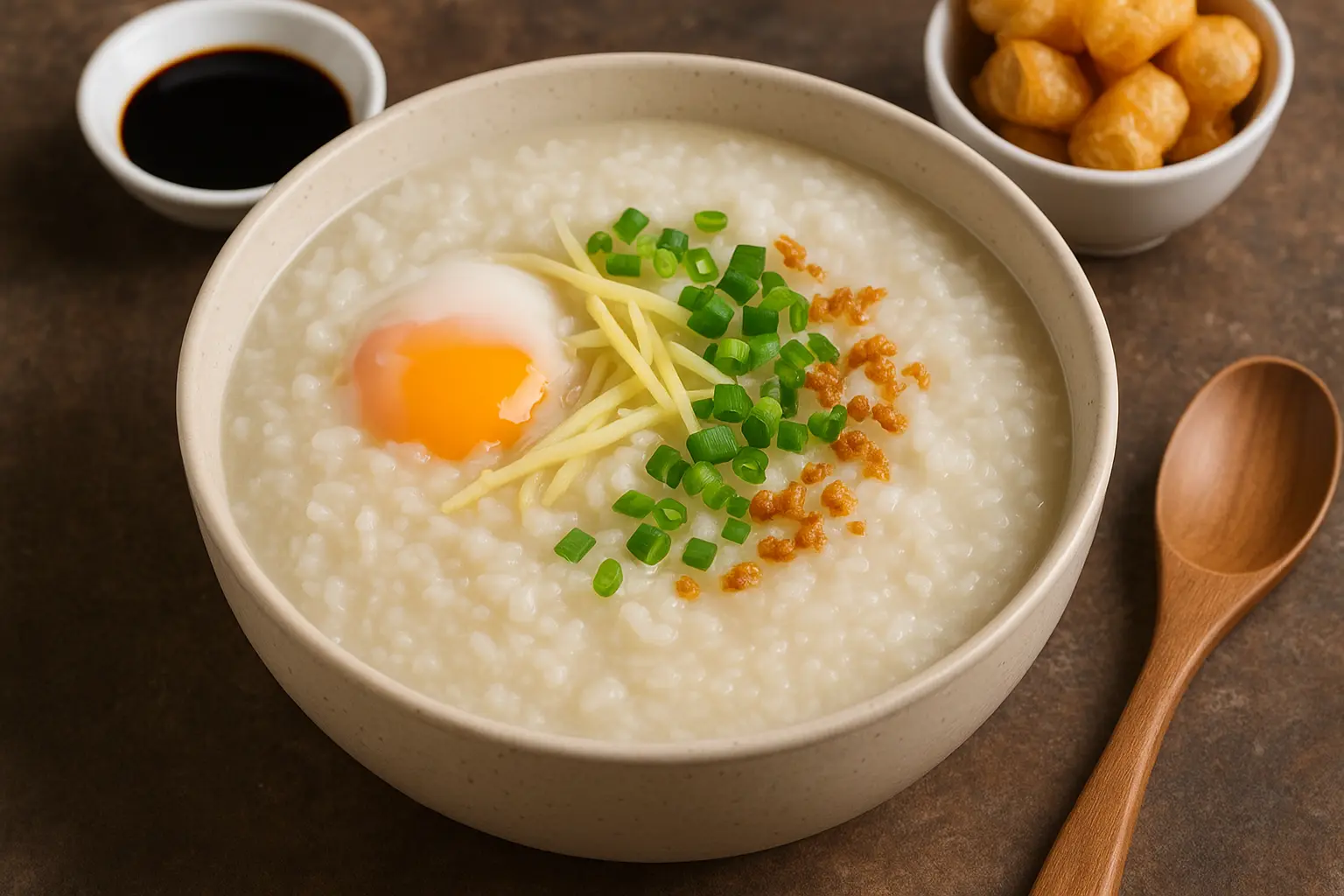
Congee, also called zhou or jook, is one of the most famous forms of rice porridge. It’s popular across China, Hong Kong, Taiwan, and Southeast Asia.
Key Features
- Texture: Soupy, silky, and smooth.
- Cooking style: Long simmering of rice in excess water or broth until grains break down.
- Flavors: Can be plain or flavored with chicken, pork, fish, or century eggs.
Common Toppings
- Soy sauce
- Fried shallots
- Chopped scallions
- Pickled vegetables
- Chinese doughnuts (youtiao)
Recipe: Basic Congee
1 cup jasmine rice
8–9 cups water or chicken stock
Salt to taste
- Wash rice and add to a pot with water/stock.
- Simmer for 1–1.5 hours, stirring occasionally until rice breaks down.
- Season lightly; serve with toppings of choice.
2. Japanese Okayu
Japan’s version of rice porridge, okayu, is lighter than Chinese congee and often served to people recovering from illness.
Features
- Mild and delicate, often cooked with less water.
- Often seasoned with just salt, and eaten with pickles (umeboshi).
Recipe Tip
Use short-grain Japanese rice and cook in a clay pot if possible for authentic flavor.
3. Korean Juk
Korean rice porridge, juk, is a staple comfort food that comes in many varieties.
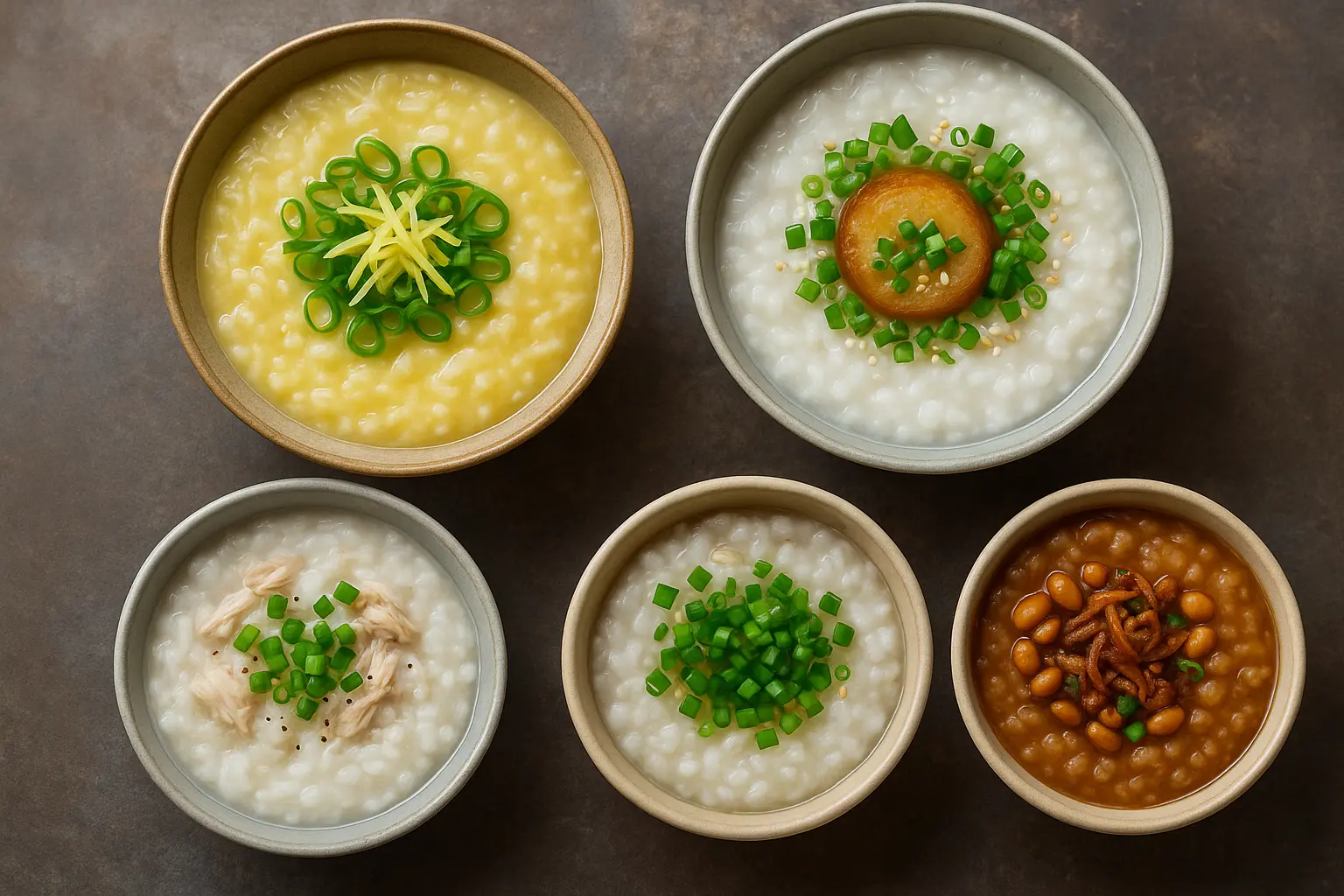
- Pumpkin juk (hobakjuk): Smooth, sweet, and creamy.
- Abalone juk: A delicacy, often served in luxury dining.
- Chicken juk (dakjuk): Nutritious and soothing.
Garnished with sesame oil, toasted seeds, or seaweed, juk blends nutrition with comfort.
4. Vietnamese Cháo
In Vietnam, rice porridge is known as cháo. It is often cooked with chicken (cháo gà) or fish (cháo cá).
- Typically flavored with fish sauce, ginger, and fresh herbs.
- Served with lime wedges, chili, and fried shallots for brightness.
5. Thai Jok
Thailand’s jok is similar to Chinese congee but often served at breakfast with pork meatballs, ginger, and a runny egg cracked on top. A drizzle of soy sauce or fish sauce enhances the umami.
6. Filipino Arroz Caldo
A Spanish-influenced dish, arroz caldo in the Philippines blends Chinese-style congee with Spanish seasonings.
- Flavored with garlic, ginger, and fish sauce.
- Garnished with boiled eggs, calamansi (local lime), and fried garlic.
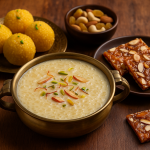
7. Indian Kheer (Sweet Rice Porridge)
India’s rice porridge tradition leans toward sweet. Kheer is a festive dish made with:
- Rice simmered in milk
- Sweetened with sugar or jaggery
- Flavored with cardamom, saffron, and nuts
Variations
- Payasam (South India): Often made with coconut milk.
- Phirni: A thicker pudding made with ground rice.
Kheer is often prepared during festivals like Diwali or Eid.
8. Middle Eastern Roz Bel Laban
Egypt and the Middle East have their own version of rice pudding, roz bel laban, flavored with cinnamon, rose water, or orange blossom. It’s creamy, rich, and served chilled as dessert.
9. Mexican & Spanish Arroz con Leche
A beloved dessert, arroz con leche translates to "rice with milk."
- Rice simmered with milk, sugar, and cinnamon.
- Sometimes enhanced with condensed milk or raisins.
- Served warm or cold, often sprinkled with cinnamon powder.
10. Italian Risotto – A Savory Cousin
While not always classified as porridge, risotto represents Italy’s comforting rice dish. Its creamy consistency makes it part of the porridge family.
- Risotto alla Milanese: With saffron.
- Seafood risotto: With shrimp, mussels, or clams.
- Mushroom risotto: A vegetarian favorite.
11. Scandinavian Rice Porridge (Risgrøt / Risgrynsgröt)
In Norway and Sweden, rice porridge is often served during Christmas.
- Cooked with milk and sugar.
- Traditionally topped with butter, cinnamon, and sugar.
- Sometimes hides an almond inside; whoever finds it gets a prize.
12. Caribbean Rice Porridge
In Jamaica and the Caribbean, rice porridge is flavored with coconut milk, nutmeg, and vanilla. Thick, sweet, and spiced, it’s often a hearty breakfast.
Cooking Methods & Tips
- Stovetop simmering: Traditional method, but time-consuming.
- Slow cooker / Crockpot: Ideal for overnight cooking.
- Instant Pot / Pressure Cooker: Speeds up cooking while retaining creamy texture.
Sweet vs. Savory Rice Porridge
- Sweet versions: India’s kheer, Mexico’s arroz con leche, Scandinavian rice puddings.
- Savory versions: Chinese congee, Thai jok, Filipino arroz caldo.
Both bring warmth, but sweet ones are often desserts or festive dishes, while savory ones are staples for daily meals.
Nutritional Benefits of Rice Porridge
- Easily digestible: Great for kids, elderly, or those with sensitive stomachs.
- Hydrating: High water content keeps the body hydrated.
- Customizable nutrition: Add protein (eggs, chicken, tofu), vegetables, or healthy fats.
How to Elevate Your Rice Porridge
- Toppings: Soft-boiled eggs, nuts, seeds, fried garlic, or dried fruits.
- Flavors: Infuse with herbs (ginger, lemongrass, cinnamon).
- Texture: Blend for creaminess, or leave rice grains partially intact.
Global Rice Porridge at a Glance
| Country/Region | Name | Sweet/Savory | Notable Ingredients |
|---|---|---|---|
| China | Congee (Jook) | Savory | Century egg, pork |
| Japan | Okayu | Savory | Umeboshi, salt |
| Korea | Juk | Both | Pumpkin, abalone |
| Vietnam | Cháo | Savory | Fish sauce, herbs |
| Thailand | Jok | Savory | Pork, ginger, egg |
| Philippines | Arroz Caldo | Savory | Chicken, calamansi |
| India | Kheer | Sweet | Cardamom, nuts |
| Middle East | Roz Bel Laban | Sweet | Rose water |
| Mexico/Spain | Arroz con Leche | Sweet | Cinnamon, milk |
| Italy | Risotto | Savory | Parmesan, saffron |
| Scandinavia | Risgrøt | Sweet | Cinnamon, almond |
| Caribbean | Rice Porridge | Sweet | Coconut milk, nutmeg |
Final Thoughts
Rice porridge proves that food is a universal language. Whether it’s a bowl of savory congee on a chilly morning in Beijing, a festive kheer at an Indian wedding, or a creamy arroz con leche for dessert in Mexico, rice porridge tells the story of culture, comfort, and care.
It’s simple to make, endlessly versatile, and deeply satisfying. Next time you want comfort in a bowl, try experimenting with one of these global rice porridge traditions—you might just discover a new family favorite.

Leave a comment
Your email address will not be published. Required fields are marked *